

Beyond Ideas: Are We Creating the Right Environment for Young Health Entrepreneurs to Thrive?
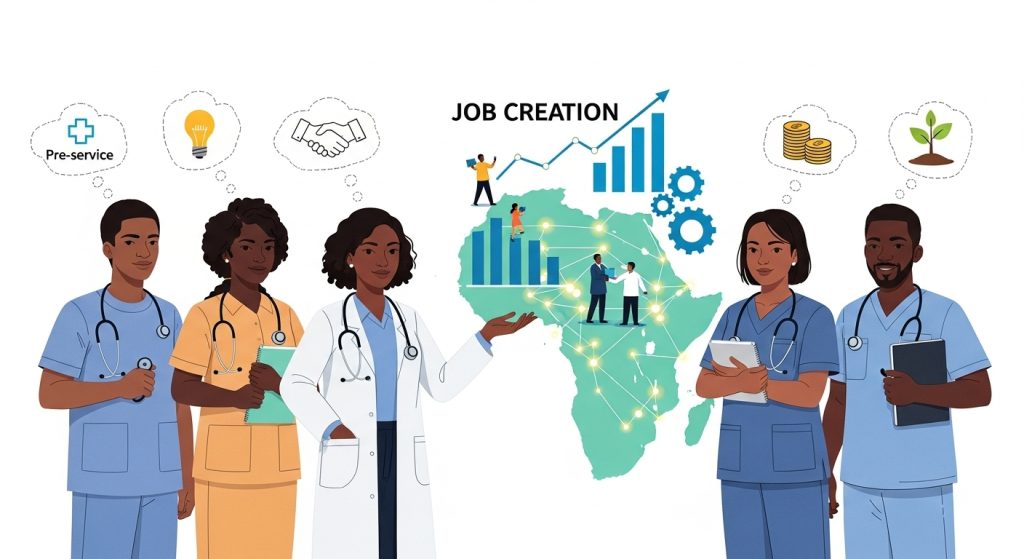
Africa’s primary healthcare landscape is changing, creating new possibilities for innovation, service delivery and employment. As healthcare systems respond to evolving population needs, technology and persistent gaps in access, young people have an increasingly important role to play in shaping the future of healthcare. Yet, having innovative ideas and the ambition to solve healthcare challenges does not automatically translate into successful enterprises. For young people seeking to develop solutions within the health sector, the journey from identifying a problem to establishing a sustainable venture can be complex. Access to financing, business development skills, mentorship, institutional support and enabling regulatory environments all influence whether promising ideas can progress beyond the conceptual stage. This raises an important question: Are our primary healthcare systems doing enough to nurture and support the next generation of health entrepreneurs? A recently published study in Frontiers in Medicine, titled Barriers and Opportunities for Youth Entrepreneurship in Primary Health Care Ecosystem in Kenya, explores this question, examining the experiences of young people and the wider ecosystem within which they seek to establish and grow health-related enterprises. The research, undertaken by a multidisciplinary team of researchers affiliated with Amref International University and partner institutions, contributes to a growing conversation about the relationship between youth entrepreneurship, health system strengthening and inclusive economic development. Its central message invites stakeholders to look beyond individual entrepreneurial ambition and consider the wider conditions that enable innovation to take root and thrive. Universities and health training institutions, in particular, have an important role in preparing graduates not only with the technical competencies to deliver healthcare, but also with the entrepreneurial capabilities to identify opportunities, develop solutions and respond to emerging health needs. Equally important is the need for stronger collaboration between academia, healthcare institutions, government, investors and development partners to create environments where young innovators can access the support and opportunities necessary to translate ideas into impact. As Kenya continues to advance its primary healthcare agenda, strengthening the connection between youth innovation and the broader health ecosystem presents an opportunity to address healthcare delivery challenges while expanding pathways for meaningful economic participation. The conversation, therefore, must extend beyond encouraging young people to become entrepreneurs. It must also consider what institutions, policies and partnerships need to do differently to make health entrepreneurship viable, inclusive and sustainable. What will it take to unlock the full potential of youth-led innovation in primary healthcare? Explore the research, its findings and recommendations in the full publication: Read the full research article Published in Frontiers in Medicine, 10 November 2026.