
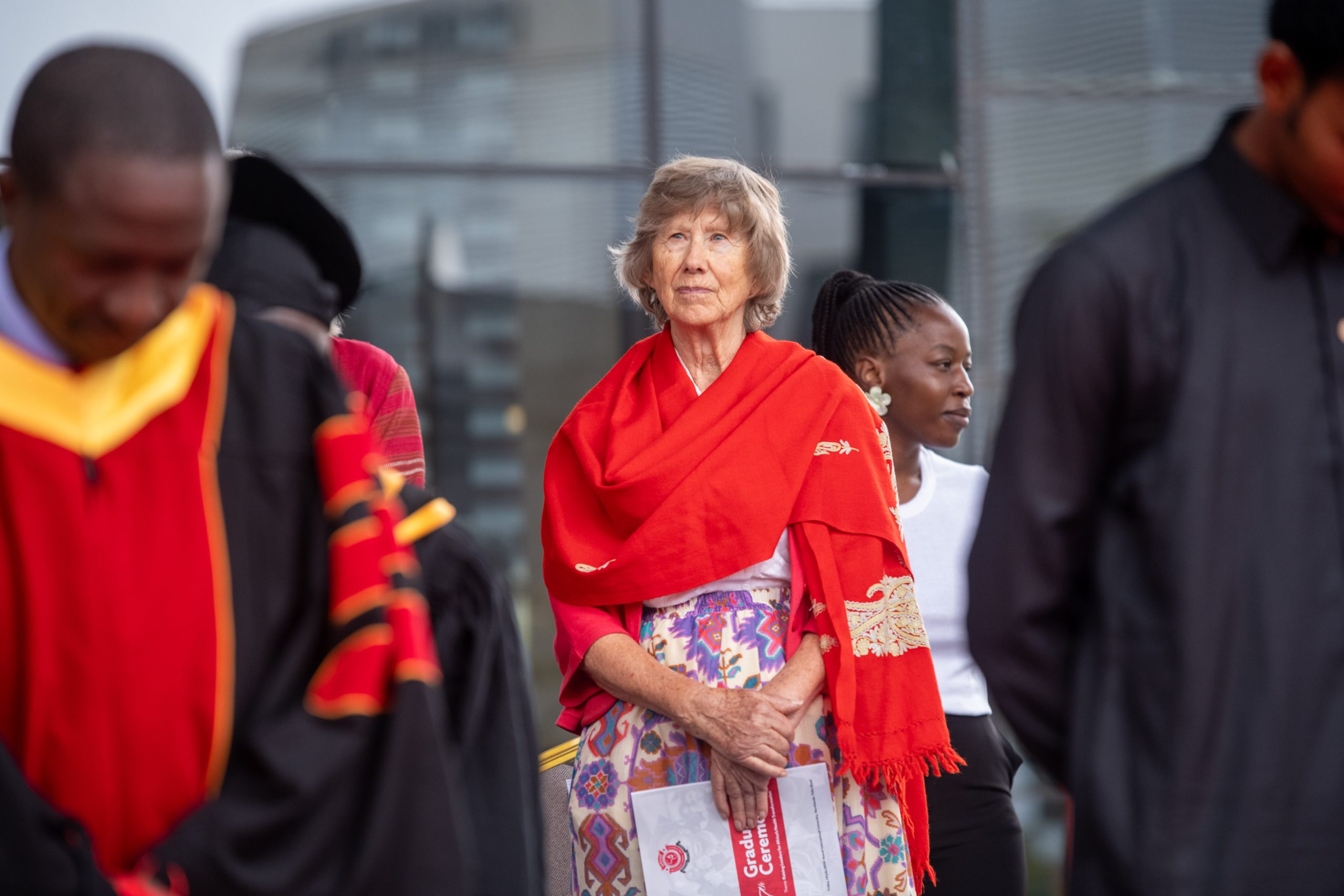
On a quiet afternoon, Nicky Blundell sits on a sunlit veranda overlooking a peaceful garden. Dressed in a light red blouse that mirrors her warm and resilient personality, she carefully turns the pages of photo albums spread across the table before her. A pair of reading glasses rests atop one album, while a bottle of water sits nearby, hinting at an unhurried conversation. Gentle daylight falls across her album photographs, each one unlocking memories that span decades.
Every now and then, she pauses over a familiar face in a photograph, allowing the past to speak. The setting feels more like a living archive, where history comes alive through stories.
Now serving as the custodian of Amref Heritage, Nicky is passionate about ensuring that future generations understand the organization’s remarkable journey.
Looking thoughtfully into the distance, she begins, “To me, heritage is about capturing the past and constructing the future. These are the bricks upon which every organization is built. Without heritage, an organization loses its roots, its family, and its direction.” She shares.
For Blundell, preserving Amref’s heritage is not simply about storing documents. It is about safeguarding the vision that has shaped Africa’s largest international health organization for nearly seven decades.
Nicky’s own journey with the organization began unexpectedly in London. After returning from South Africa, where she found life difficult in the aftermath of apartheid, she was searching for employment in London. A friend referred her to Sue, a woman whose life had been saved by the Flying Doctors after she contracted sleeping sickness. Sue chaired the AMREF support office in the United Kingdom, and during the interview she passionately recounted the life-saving work of the Flying Doctors, stories that greatly captivated Nicky.
She accepted the job on 2 January 1972, never imagining it would become the defining journey of her life.
Nicky speaks about her moments at Amref with a strong conviction and certainty “It has been the most wonderful journey of constant change, unexpected challenges, and fulfilment beyond my wildest dreams,” she says with a smile. “I’ve met some of the most fascinating, inspiring and thought-provoking people along the way,” she discloses.
She is fortunate to have worked alongside one of Amref’s founders, Sir Michael Wood, for several years.
“To see a man with such an enormous commitment to improving the lives of African people was remarkable. That inspiration has stayed with me throughout the 54 years I have worked with Amref.” She says.
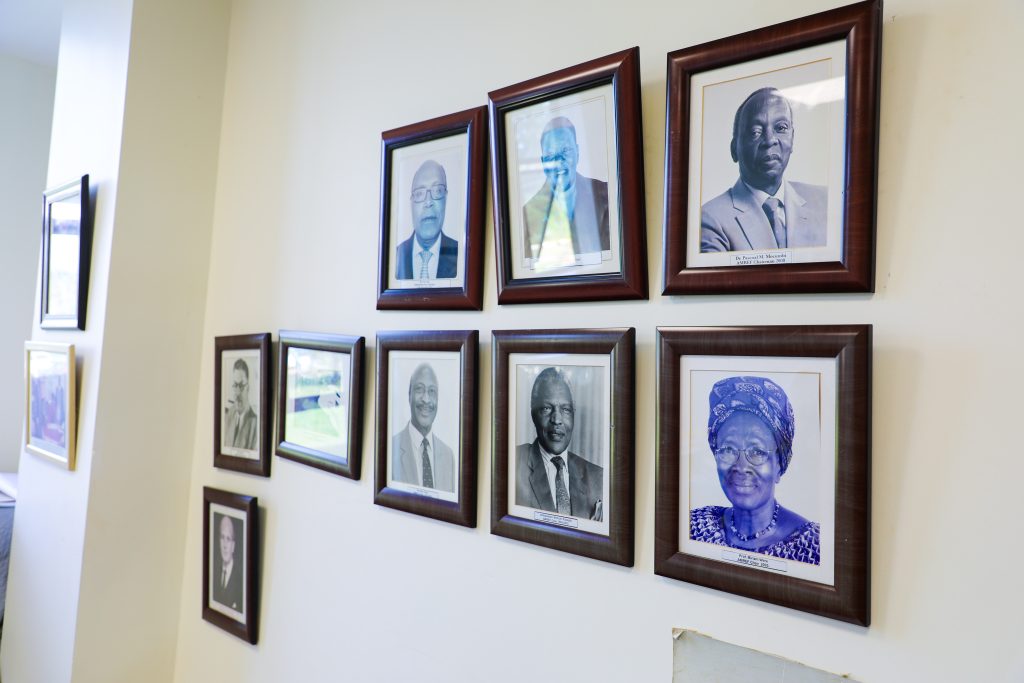
For instance, she vividly recalls meeting wood during one of his visits to London. “He had an incredibly strong handshake and the most piercing blue eyes,” Nicky vividly recalls as her eyes look far into the horizon.
Before leaving, Wood confidently told her that she would be in Africa before the year ended. True to his word, in January 1973 she set foot in Africa for the first time as an Amref staff member.
One experience transformed her commitment forever. She travelled to northern Kenya with the legendary Dr. Anne Spoerry, better known as Mama Daktari, whose medical flights served remote communities in North Horr, Isiolo and Moyale every three months.
“That visit completely ignited my passion for the organization,” Nicky recalls.
Wherever the aircraft landed, people gathered within minutes to receive treatment. What amazed Nicky most was Dr. Spoerry’s extraordinary memory. She remembered individual patients, their illnesses, and the medications they needed months later. She spoke Swahili and communicated effortlessly through gestures, kept every appointment with remarkable punctuality, and even carried fresh produce from her own farm to patients.
One Samburu elder summed up her impact simply: “Before the government, there was Mama Daktari.”
From 1964 to 1999, Dr. Spoerry’s dedication transformed lives across northern Kenya. Communities maintained the airstrips themselves because they understood how essential the medical flights were.
Reflecting on Amref’s origins, Nicky explains that the organization’s founders including Sir Michael Wood and Sir Archibald McIndoe were reconstructive surgeons who regularly travelled across East Africa during the 1950s. While conducting surgeries, they recognized that treating patients alone would never solve Africa’s health challenges. This inspired them to shift from curative medicine to preventive and community health work, leading to the establishment of Amref in 1957.
“We work with communities because if we don’t work with communities, we can never make any impact,” wood often mentioned. “Identify a problem, find a solution, mobilize resources, and implement it.” That philosophy continues to define Amref’s work today.
She believes the archives are far more than historical records – they are practical learning resources for students, researchers and health professionals.
“There is so much they can learn,” she says. “They can see the challenges people faced, the innovative solutions they developed, and adapt those ideas for today’s problems.”
Nicky marvels at how healthcare workers operated decades ago without mobile phones, computers or reliable roads. Communication depended entirely on radio networks linking Kenya, Tanzania and Uganda. Many of those original radios are now preserved in the Amref Flying Doctors Museum, serving as reminders of the ingenuity that characterized early health outreach across the continent.
Among Amref’s greatest achievements, Nicky points to its leadership in promoting primary healthcare. She particularly remembers pioneers such as Dr. Roy Shaffer, whose mobile clinics and community health initiatives such as advocacy against female genital mutilation through alternative rites of passage demonstrated the power of working alongside communities rather than imposing solutions.
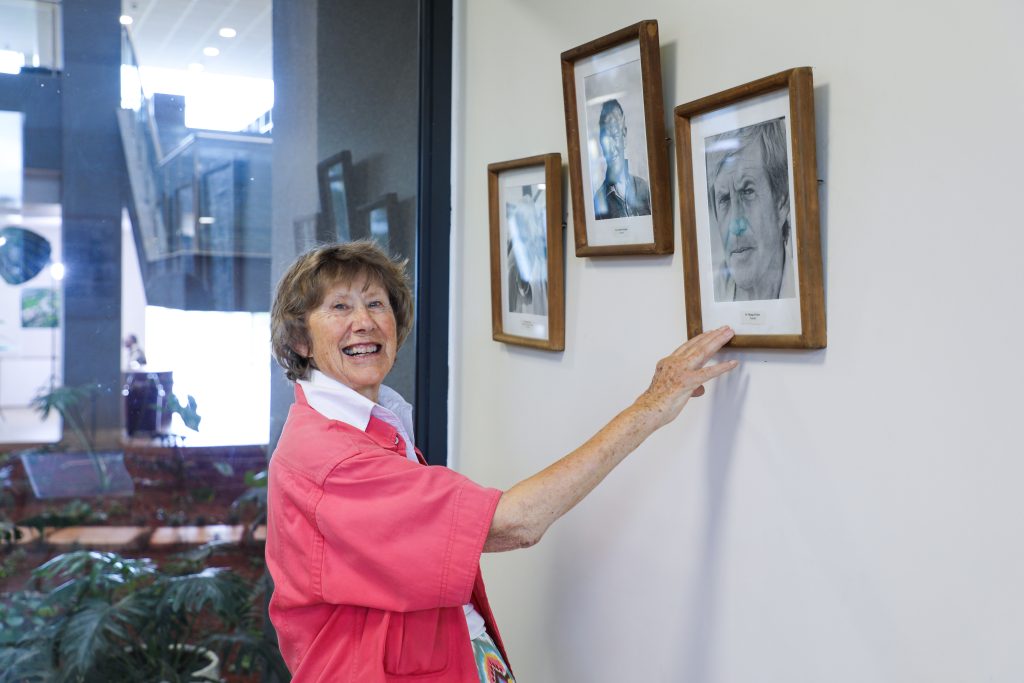
Not every chapter has been easy however. One of the greatest losses came in 1998 when Amref’s central filing system was severely damaged, destroying invaluable historical records.
“I was shocked to see so much important information lying on the floor,” she says.
The experience strengthened her resolve to establish and expand the Heritage Office, ensuring that future generations would never lose such invaluable institutional memory again.
Today, she encourages every member of staff to document their work.
“Keep a record of the challenges you’ve overcome, the solutions you’ve found, and share them with the organization. Everybody has a role to play in preserving our history.”
As new staff join Amref, Nicky hopes they appreciate the remarkable legacy upon which they are building their own careers.
“My journey in heritage has been rewarding and exciting,” she says. “I invite anyone interested to become part of preserving this story.”
As the afternoon light begins to fade, she gently closes another photo album.
After more than half a century with Amref, her conviction remains unwavering: the organization’s history is not merely about the past. It is a living source of inspiration for everyone committed to advancing health across Africa.
“People should take advantage of the excitement of the Amref story,” she says. “It is a remarkable evolution of solutions to healthcare challenges. I hope students, researchers and practitioners will allow it to inspire their own journey of learning, service and innovation.”
By Lawrence Mwenda