
PRESS RELEASE
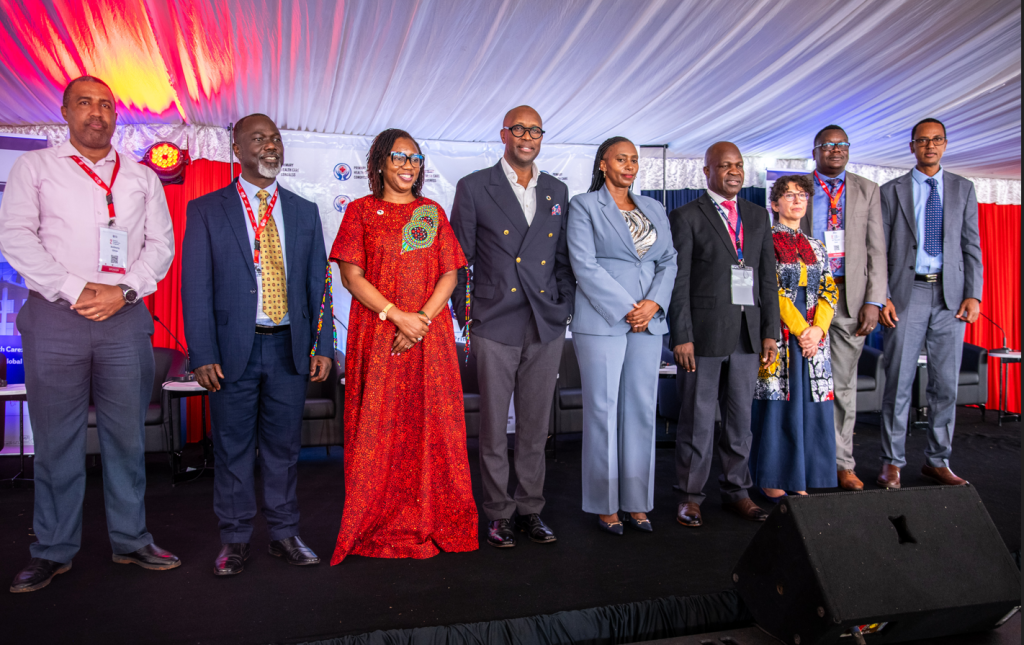
African Health Leaders Call for Urgent Investment in Primary Health Care to Accelerate Universal Health Coverage. Nairobi, Kenya | 4 March 2026 Health leaders, policymakers, academics, and development partners gathered in Nairobi today for the opening day of the 2nd Primary Health Care Congress, calling for stronger investment in Primary Health Care systems as the most effective pathway to achieving Universal Health Coverage across Africa. The Congress has convened regional and global stakeholders to examine how stronger community-based health systems can improve health outcomes, strengthen health security, and reduce the financial burden of healthcare on households. Discussions during the opening sessions highlighted the urgent need to prioritize Primary Health Care as the foundation of resilient health systems. Participants emphasized that effective PHC systems strengthen prevention, enable early disease detection, and expand access to essential health services for underserved communities. Speakers also noted the progress made through recent health sector reforms in Kenya, including the Primary Health Care Act, Digital Health Act, Facility Improvement Financing Act, and Social Health Insurance Act. These reforms were recognized as important steps toward strengthening health systems and expanding access to quality health services. “Primary Health Care is the foundation of equitable health systems. If we are to achieve Universal Health Coverage in Africa, we must invest in strong community-based health systems that prevent disease and bring care closer to the people,” said Dr Githinji Gitahi, Group CEO Amref Health Africa. Throughout the discussions, speakers emphasized the critical role of community health systems in delivering preventive services and supporting disease surveillance. Community Health Promoters were identified as essential in extending health services to households and ensuring early detection of health threats. Participants also highlighted the importance of stronger collaboration between governments, universities, and development partners to generate evidence and train the health workforce needed to support effective PHC systems. “Universities must play a central role in strengthening Primary Health Care systems by generating evidence, training the health workforce, and shaping policies that respond to the real health needs of communities,” said Prof. Joachim Osur, VC, Amref International University Financing also emerged as a key issue during the opening sessions. Delegates called for stronger domestic investment in health systems and sustainable financing models that ensure resources reach frontline facilities and communities where services are delivered. Participants further emphasized the need for inclusive health systems that ensure vulnerable populations, including refugees and underserved communities, have equitable access to essential health services through Primary Health Care. The 2nd Primary Health Care Congress continues through 6 March 2026 and will feature discussions on leadership, governance, innovation, workforce development, and financing strategies aimed at strengthening Primary Health Care systems across Africa. For media inquiries: Angie Gichimu Email: amiucommunications@amref.ac.ke
Celebrating Excellence: AMIU Promotes Three to Associate Professor

At AMIU, we believe that academic excellence deserves recognition, and today, we are thrilled to celebrate a major milestone in the careers of three of our exceptional colleagues. Following a rigorous and transparent process involving advertisement, shortlisting, and interviews in accordance with university policy, these individuals have been promoted to the esteemed rank of Associate Professor.This achievement is not just a personal triumph for the recipients it’s a reflection of their unwavering commitment to scholarship, teaching, and service to the university community. Their promotion underscores the values we hold dear at AMIU: integrity, innovation, and impact.
Health Carousel Foundation Funds New Simulation Lab at Amref International University

Amref Health Africa and Amref International University (AMIU) are proud to announce a $250,000 donation from Health Carousel Foundation to equip a state-of-the-art Simulation Laboratory at AMIU’s Northlands campus in Kenya. The new lab will offer hands-on clinical training for nurses, midwives, and healthcare professionals from over 30 African countries. In 2025 alone, over 3,500 students are expected to benefit from this advanced learning facility. The Simulation Lab is a cornerstone of AMIU’s broader campus development and naming campaign. “This generous gift is a direct investment in Africa’s future health workforce,” said Prof. Joachim Osur, Vice Chancellor of AMIU. “We are honored to partner with Health Carousel Foundation in our shared mission to transform health training across the continent.” To learn more about naming rights and partnership opportunities at AMIU, please visit: Naming Opportunities About AMIU Amref International University is a pan-African health sciences university established by Amref Health Africa. It is dedicated to developing a skilled health workforce and generating evidence to expand equitable access to primary healthcare across Africa. AMIU focuses on training the “missing middle” of Africa’s health workforce: mid-level providers essential to delivering care at the community level. About Health Carousel Foundation Health Carousel Foundation is the philanthropic arm of Health Carousel, dedicated to improving global healthcare by investing in ethical, sustainable health workforce development. The Foundation invests in education and training initiatives that empower health professionals and strengthen health systems in underserved communities around the world. For media inquiries: Edius Nyaradzai Makono Director, Advancement, AMIU Email: advancement@amref.org| Phone: +254741743871
Amref International University Celebrates 6th Graduation and Unveils New State-of-the-Art Northlands Campus in Ruiru, Nairobi.

Nairobi, Kenya | 11 July 2025 – Amref International University (AMIU) today marked a transformative milestone with its 6th Graduation Ceremony and the official inauguration of its ultra-modern Northlands Campus in Ruiru. The event was presided over by the Fourth President of the Republic of Kenya, H.E. Uhuru Kenyatta, who was represented by Former First Lady Her Excellency Margaret Kenyatta. In a show of commitment to advancing health education, H.E. Kenyatta awarded 10 fully funded scholarships to support bright, deserving students pursuing careers in health sciences. More than 400 graduates were conferred with degrees, diplomas, and certificates in various health-related disciplines. Under the theme “Localising Innovations to Strengthen Primary Health Care in Africa”, the occasion underscored AMIU’s commitment to building a future-ready health workforce equipped to deliver sustainable, community-centered solutions across the continent. The ceremony brought together senior government officials, development partners, university leadership, faculty, students, alumni, and representatives from Amref Health Africa. It marked the beginning of a new chapter for AMIU as a regional hub for health education, research, and innovation. In remarks delivered on his behalf by Former First Lady Margaret Kenyatta, H.E. Uhuru Kenyatta applauded AMIU for prioritising homegrown solutions to Africa’s health challenges: “This campus will be instrumental in equipping our communities with locally driven solutions. It is an affirmation of your commitment to localising innovation to strengthen primary health care across Africa. Innovation, advanced indigenous research, policy diversity, compassion, and new technologies—this is now your responsibility,” he said. Speaking at the event, Dr Githinji Gitahi, Group CEO of Amref Health Africa, emphasised the importance of expanding Africa-led institutions to localise knowledge and improve access to care: “We cherish our alliances, global, regional, and local. It is through working together that we can develop sustainable, contextually relevant education models that shape the resilient health systems Africa needs,” he noted. The Northlands Campus, a flagship investment in health sciences education, features cutting-edge learning spaces, modern laboratories, an innovation hub, and a world-class library. The development was made possible through philanthropic contributions, including a landmark gift from philanthropist Ms MacKenzie Scott and sustained support from institutional partners such as the Kenyatta family. The new campus is expected to increase student capacity from 2,000 to 10,000 students across physical and virtual learning, meeting the growing demand for health workforce training that reflects both local and international needs. Prof Joachim Osur, Vice Chancellor of AMIU, underscored the university’s resolve to provide quality, affordable, and relevant education rooted in African realities: “We have strengthened our focus on community-based education, ensuring that learning is embedded in real-life practice and local health contexts,” he said. With the graduation of 417 students across diverse health science disciplines and the commissioning of the Northlands Campus, AMIU continues to drive progress toward the Sustainable Development Goals, particularly SDG 3 (Good Health and Well-being) and SDG 4 (Quality Education). Notes to the Editors About Amref International University Founded in 2017, Amref International University (AMIU) is a premier Pan-African university dedicated to advancing health sciences education. A proud creation of Amref Health Africa, AMIU draws on over 65 years of expertise in innovative public and community health interventions across more than 30 African countries. The university focuses on training, research, and health sciences extension, with an emphasis on promotive, preventive, rehabilitative, and palliative health. AMIU offers a range of postgraduate, undergraduate, diploma, certificate, and Continuing Professional Development (CPD) courses, equipping future health professionals with the skills to meet Africa’s evolving health needs. https://amref.ac.ke/ Media Contacts Betty Buyuka Corporate Communications Manger betty.buyuka@amref.ac.ke
Rethinking Health Research Through Systems Thinking

Rethinking Health Research Through Systems Thinking: The AMIU/–HSS-MEAL Collaboration Model In today’s rapidly evolving landscape of global health, there is a growing recognition that linear, isolated interventions are no longer sufficient to address the complex, interconnected challenges that health systems face. This reality demands a new paradigm: systems thinking in health research. It’s an approach that acknowledges the complexity of health systems and seeks solutions by understanding the relationships between their parts. In this spirit, the AMIU–/HSS-MEL Research Collaboration championed by Amref Health Africa stands out as a pioneering initiative built not only on generating evidence but on redesigning how that evidence is created, interpreted, and used to transform health systems from the ground up. At its core, the collaboration embraces a systems lens by placing equal emphasis on relationships, feedback loops, and co-creation. The initiative operates under the theme: “Partnership for Collaboration & Co-Creation of Evidence to Strengthen Outcomes & Policy Translation.” This is not a catchphrase, —it is a working model. Rather than producing isolated research outputs, the collaboration brings together a diverse ecosystem of stakeholders: AMIU postgraduate students and faculty, ministries of health, civil society organizations, community actors and Amref’s country offices, MEL teams, and the Amref’s HQ-HSS departmentdirectorate. The co-creation model ensures that each stakeholder plays a distinct but interdependent role turning them into joint architects of research design, implementation, and knowledge generation and translation. The university postgraduate students and faculty ensures that fresh perspectives are combined with academic rigor, while the involvement of CSOs and implementing partners guarantees that the research agenda is grounded in lived realities and pressing local challenges. This continuous dialogue between stakeholders embeds local contextualization and priming into every phase, ensuring that the evidence generated is not only academically rigorous but operationally relevant, —a key principle of systems-informed inquiry. This co-creation also fosters adaptability: as new system behaviors emerge, the research agenda can pivot, preventing costly detours and reinforcing the system’s capacity for learning. legitimacy, and impact. Fig. 1: The ecosystem of partners A major strength of systems thinking is that it resists the urge to simplify. The AMIU/HSS initiative reflects this by addressing learning questions drawn from the lived experiences of communities and that span multiple facets of the health system, including Primary Health Care, RMNCAH (Reproductive, Maternal, Neonatal, Child and Adolescent Health), neglected tropical diseases, food systems, health governance and information systems, and human resources for health. This multidisciplinary, multi-thematic structure recognizes that improvements in one domain are inherently linked to others therefore, each learning question becomes a micro-simulation of broader system dynamics, ensuring findings capture both intended and unintended consequences. Through this approach, the initiative also builds institutional and human capacity across the system. Faculty and supervisors are equipped to mentor with a systems lens, students are trained not just in methodology but in complexity, interdependence, and stakeholder engagement, policy actors and implementing partners learn how to integrate evidence into decision-making frameworks, and for the broader health research ecosystem, it sets a precedent for how academic institutions can move beyond ivory towers to become integral drivers of system transformation. Each part of the system is strengthened in relation to the others, creating resilience that extends beyond the life of the initiative. Leadership development is also a key outcome of this initiative. By immersing students in systems mapping exercises, causal loop diagramming, and scenario planning, the program cultivates a new cadre of health professionals equipped to navigate complexity. These emerging leaders learn to ask the “why” behind the “what,” to trace the upstream drivers of downstream health outcomes, and to spotlight emergent behaviors that static models would overlook. Such capacity building generates a ripple effect: as alumni integrate systems approaches into their future roles, —whether in government ministries, NGOs, or academia, —they diffuse a mindset of holistic inquiry. Fig. 2: The AMIU-HSS -MEL Collaboration Model Ultimately, the AMIU–/HSS-MEAL Research Collaboration is a bold demonstration of how systems thinking can be operationalized in health research. It challenges the traditional boundaries between academia and practice, between research and policy, and between knowledge and action. It affirms that health systems are complex, but not unknowable; and that with the right approach, —grounded in collaboration, co-creation, and systems thinking, —we can generate evidence that not only informs but transforms. In doing so, the initiative positions itself at the cutting edge of health systems research. It is not simply about what we study, —it is about how we study it, with whom, and to what end. The AMIU–/HSS-MEAL Research Collaboration reminds us that in a complex world, the most powerful answers come not from isolated findings, but from connected minds working within a connected system. By David Olpengs and Dr. Jennifer Mamwa Health Systems Strengthening department, Amref HQ
AMIU Strengthens Global Academic Ties Through Exchange Visit to University of Verona

See Original Post>> In a strategic move to foster international collaboration in health education and research, a delegation from Amref International University (AMIU), led by the Director of Research, visited the University of Verona in Italy from May 4 to 9, 2025. The visit was part of an ongoing faculty and student exchange programme aimed at enhancing academic partnerships and cross-cultural learning. The AMIU team included two students enrolled in the Advanced Diploma in Mental Health—Tecla and Joan Abuom—who engaged actively in discussions and learning sessions with their Italian counterparts. The visit featured a series of high-level engagements with officials from the University of Verona, including representatives from the Office of International Cooperation. As part of the academic exchange, Dr. Alice Lakati, Director of Research at AMIU, delivered an insightful guest lecture on the role of primary healthcare in strengthening health systems in Africa. Additionally, Dr. Lucy Njiru shared her groundbreaking research on mental health, drawing significant interest from university faculty and students alike. This collaboration marks a significant milestone in AMIU’s mission to expand its global footprint, promote research excellence, and build a network of future health leaders through international exposure and partnerships.
Building bridges for global health: UBC SPPH and Kenya’s AMIU sign landmark cooperation agreement
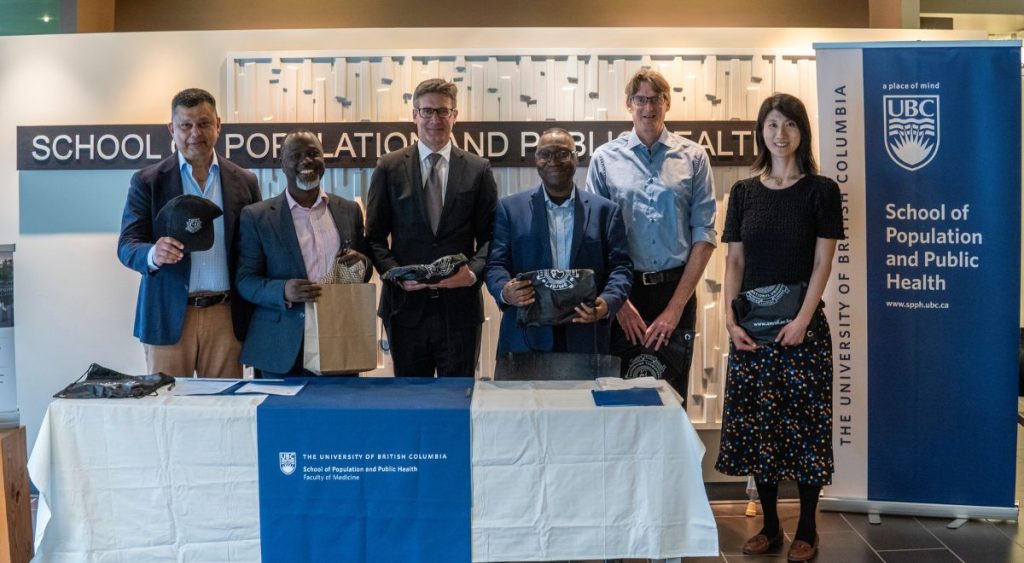
The UBC School of Population and Public Health (SPPH) and Amref International University (AMIU) in Kenya sign Statement of Cooperation to address global health challenges through collaborative research and education. The Statement of Cooperation between UBC SPPH and AMIU reflects a mutual commitment to collaborative research, academic exchange, and community-engaged learning in global health. This partnership, supported through the UBC Seed Funding for Collaboration with the Global South initiative, underscores UBC’s dedication to forging meaningful international relationships that transcend geographical boundaries in pursuit of health equity. The Statement of Cooperation was signed by Dr. Dean Jones, Vice-Dean, Health Engagement and Partnerships with the UBC Faculty of Medicine, Dr. Aslam Anis, Director of SPPH at UBC, and Dr. Joachim Osur, Vice-Chancellor of AMIU, at a ceremony in Vancouver, British Columbia on April 10. “In Amref International University, we recognize a partner whose deep expertise in African health systems and community-based approaches to healthcare delivery will bring invaluable insights to our collaborative work,” said Dr. Anis. “AMIU’s longstanding commitment to training healthcare professionals and leadership in health systems strengthening across East Africa represents precisely the kind of knowledge and experience that will enrich our collective research and teaching endeavors.” The Statement of Cooperation focuses on several key areas where complementary strengths of both institutions can generate meaningful impact, including collaborative research addressing pressing global health challenges in both Kenya and Canada, and opportunities for knowledge exchange through virtual symposia, experiential learning, joint courses, and exchange programs. “This partnership could not come at a more meaningful time. As we prepare to launch the Master of Global Health (MGH) program in September 2026, we are guided by a vision of preparing the next generation of global health leaders through practice-based, community-engaged learning,” said Dr. Daniel Steel, MGH Program Director. “Our collaboration with AMIU – an institution with deep roots in African health systems and community-driven innovation—offers our students and faculty an invaluable opportunity to learn from, and contribute to, grounded, context-rich global health practice.” “What excites me most about this partnership is the shared commitment to building relationships that are rooted in equity, reciprocity, and a truly global perspective.” said Khumbo Kalua, MGH Practicum Director and Project Lead for UBC’s Seed funding for collaboration with the global south. “This is not just about student placements or research opportunities—though those are important. It’s about co-creating spaces where knowledge flows both ways, where we challenge each other, grow together, and build solutions that reflect the complexity and richness of the communities we serve.” This collaboration also resonates with the recent release of Protecting Our Collective Future: Renewing Canada’s Role in Global Health, a report by the Canadian Academy of Health Sciences and Royal Society of Canada. The report challenges Canadian institutions to deepen partnerships grounded in respect, reciprocity, and shared leadership. Today’s agreement is a concrete and hopeful step in that direction.
SUPPLY AND DELIVERY OF ASSORTED MOVABLE FURNITURE AND OTHER RELATED ITEMS: TENDER NO. AMIU/21/03/2025/003
Amref Health Africa invites sealed bids from eligible candidates for the supply and delivery of assorted movable furniture and related items for the Amref International University (AmIU) Northlands Campus in lots as listed below; Tender Advert >>> Lot 1 >>> Lot 2 >>> Lot 3 >>>
Educational program fosters entrepreneurship and awards seed money to launch public health social enterprises and drive impact in primary healthcare.

Joint media release: Amref International University and Family Larsson-Rosenquist Foundation NAIROBI, 19 MARCH 2025 – Amref International University (AMIU), a subsidiary of Amref Health Africa, in collaboration with the Family Larsson-Rosenquist Foundation (FLRF), completes inaugural ‘From Idea to Impact – Building a Public Health (Social) Enterprise’ learning cycle with an award ceremony in Nairobi. Ambassador of Switzerland to Kenya, His Excellency Mr. Mirko Giulietti, was the guest of honor. He addressed the students, recognizing their outstanding accomplishments and wishing them heartfelt success. Students and early-stage health entrepreneurs took part, learning essential principles and practices of entrepreneurship over 12 months. This first learning cycle culminated in a business plan competition and award ceremony – the top three business plans won seed money (USD 3,000, 2,000, and 1,000) to launch their ventures. The goal of the ‘Idea to Impact’ program is to empower participants to conceive and implement business models that are both financially viable and aligned with their social objectives. “The collaboration between nations is a multifaceted endeavor, where private initiatives like the one which we have witnessed today between the Family Larsson-Rosenquist Foundation and Amref International University provide important and vibrant contributions to the strengthening of our relations,” said His Excellency Mr. Mirko Giulietti. This was echoed by Dr. Katharina Lichtner, FLRF Managing Director and program facilitator: “Our collaboration with Amref International University has been a truly rewarding experience, marked by mutual discovery and learning. It is a privilege working alongside the University’s dedicated faculty and its passionate public health students. The students’ commitment to advancing public health through entrepreneurship has been especially inspiring. We look forward to continuing our work together.” “The University is honored to collaborate with Dr. Katharina Lichtner and the Family Larsson-Rosenquist Foundation in empowering the next generation of health entrepreneurs. Over the past year, FLRF has provided invaluable entrepreneurship training, mentorship, and support to our early-stage health innovators, equipping them with the skills and confidence to transform their ideas into impactful public health solutions. This partnership is instrumental in fostering sustainable social enterprises that will drive meaningful change in healthcare,” said Dr. Dancan Irungu, Director – Health Entrepreneurship Academy, Amref International University. The second 12-month learning cycle has just begun. The program aims at driving excellence and long-lasting success in entrepreneurship. It is implemented through the AMIU Health Entrepreneurship Academy – a pioneering initiative dedicated to fostering healthcare innovation and entrepreneurship. Its focus areas are health entrepreneurship training, incubation of healthcare innovations, and manufacturing of health products and technologies. About Amref International University Founded in 2017, Amref International University (AMIU) is a premier Pan-African university dedicated to advancing health sciences education. A proud creation of Amref Health Africa, AMIU draws on over 65 years of expertise in innovative public and community health interventions across more than 30 African countries. The university focuses on training, research, and health sciences extension, with an emphasis on promotive, preventive, rehabilitative, and palliative health. AMIU offers a range of postgraduate, undergraduate, diploma, certificate, and Continuing Professional Development (CPD) courses, equipping future health professionals with the skills to meet Africa’s evolving health needs. https://amref.ac.ke/ About the Family Larsson Rosenquist Foundation The Family Larsson-Rosenquist Foundation, established in Switzerland in 2013, is an independent philanthropic organization revitalizing the journey from science to impact. The Foundation’s priority is to increase breastfeeding rates worldwide, so its focus is on helping build innovative, efficient pathways to get there. The team supports and collaborates with researchers, policymakers, practitioners, government leaders, and partner organizations working to ensure every child has an optimal start in life through the benefits of breastmilk. www.larsson-rosenquist.org Media contacts Amref International University Family Larsson-Rosenquist Foundation Betty Buyuka Cassandra Petrakis Zwahlen Corporate Communications Manger Lead English Communications betty.buyuka@amref.ac.ke petrakis.zwahlen@larsson-rosenquist.org
AMIU Rises to the Top: Ranked 3rd in Kenya in the Times Higher Education World University Rankings 2025.

Nairobi, Kenya – 11 October 2024 – Amref International University (AMIU), Amref Health Africa’s Primary Healthcare University, is proud to announce its ranking in the Top 3 Universities in Kenya – in the Times Higher Education – World University Rankings 2025, released on 9th October 2024 This accomplishment underscores AMIU’s commitment to academic excellence, its expanding global connections, and the vast opportunities it provides for its graduates. It is a direct reflection of the dedication, hard work, and passion of our students, faculty, the AMIU community and the support of its sponsor, Amref Health Africa. With a diverse international student body from 26 countries (Angola, Botswana, Burundi, Cameroon, Democratic Republic of Congo, Eritrea, Ethiopia, Ghana, India , Liberia, Malawi, Mali, Mozambique, Nigeria, Portugal, Rwanda, Senegal, Sierra Leone, Somalia, South Africa, South Sudan, Swaziland, Tanzania, Uganda , Zambia and Zimbabwe), a deliberate gender bias to women and girls reflecting the gender mix in the health workforce, and an outstanding teaching environment, AMIU continues to lead the way in primary healthcare training. The recognition comes at a crucial time for Africa, as the continent faces significant healthcare challenges, including a severe shortage of health workers. With more than 600 million people lacking access to health services they need in Africa, inequity in health services remains a pressing issue. According to the World Health Organization (WHO), Africa has a healthcare worker density of 1.55 per 1,000 people, well below the WHO’s threshold of 4.45 health workers per 1,000 people needed to achieve universal health coverage. This challenging environment highlights the vital role of AMIU and its sponsor, Amref Health Africa. “While training has always been integral to Amref’s mission, AMIU was established as an applied health sciences university to develop a health workforce equipped to drive equitable access to primary healthcare across Africa. With our focus on training, research, and innovation in health sciences, we are proud to be contributing to bridging the critical gap in the continent’s health workforce,” said Dr. Githinji Gitahi, Group CEO, Amref Health Africa. “It’s a moment of pride for us to see the university standing tall, just a few years after its founding in 2017. Congratulations to our students, parents, University Council, and our dedicated teaching and non-teaching staff.” The ranking also reflects AMIU’s commitment to advancing the United Nations Sustainable Development Goals (SDGs), particularly SDG 3—ensuring healthy lives and promoting well-being for all. This focus extends to Zero Hunger (SDG 2), Gender Equality (SDG 5), and Clean Water and Sanitation (SDG 6), which are essential drivers of health and key pillars of Amref’s corporate strategy. Partnership for Impact “This recognition is a testament to the power of collaboration and the strength of our partnerships,” said Prof. Joachim Osur, Vice Chancellor of AMIU. “Our success is built on the foundation of joint research projects, impactful publications, and outreach programs with our valued partners. We are grateful for their unwavering support, which has played a significant role in boosting AMIU’s global visibility and impact.” AMIU currently has a population of 1045 undertaking undergraduate courses, 480 undertaking Masters programs and 1379 pursuing Diplomas and certificates all in primary healthcare with an annual growth of 39% To accommodate this rapid growth, AMIU is preparing to move to its new Nairobi Northlands campus in March 2025, remaining steadfast in the mission to address the continent’s healthcare challenges by training the next generation of health professionals. Together with our partners, we are committed to improving health outcomes across Africa and ensuring equitable access to quality healthcare. [Ends] Notes to Editors About Amref International University Founded in 2017, Amref International University (AMIU) is a premier Pan-African university dedicated to advancing health sciences education. A proud creation of Amref Health Africa, AMIU draws on over 60 years of expertise in innovative public and community health interventions across more than 30 African countries. The university focuses on training, research, and health sciences extension, with an emphasis on promotive, preventive, rehabilitative, and palliative health. AMIU offers a range of postgraduate, undergraduate, diploma, certificate, and Continuing Professional Development (CPD) courses, equipping future health professionals with the skills to meet Africa’s evolving health needs. For more information, visit www.amref.ac.ke. Media Contacts Amref International University betty.buyuka@amref.ac.ke