
Stella Juva launches in Kenya as solar-powered ambulance begins real-world healthcare testing

Amref International University hosted the Kenya launch of Stella Juva, a solar-powered ambulance developed by 23 students from Eindhoven University of Technology, ahead of a real-world test journey through Nakuru, Narok and Kajiado counties. Amref International University has hosted the Kenya launch of Stella Juva, a solar-powered ambulance developed by 23 students from Eindhoven University of Technology, marking the beginning of its real-world testing journey in Kenya. Stella Juva has been developed by Solar Team Eindhoven to explore how solar-powered mobility can help address healthcare access challenges in remote communities. The project brings together engineering, sustainability and healthcare, with the vehicle designed to generate energy both for mobility and for medical equipment. The launch at AMIU’s Northlands Campus brought together H.E. Jaco Beerends, Deputy Head of Mission, Embassy of the Kingdom of the Netherlands; Alex Wachira, the Principal Secretary, State Department of Energy; Dr Meshack Ndirangu, Country Director, Amref Health Africa in Kenya; a representative of the CEO of the Kenya Medical Training College; Dr Francis Kiio, Director of Health, Narok County; the Chair of the Department of Physics, Earth and Environmental Sciences at the Technical University of Kenya; and students from AMIU and Solar Team Eindhoven. AMIU Vice-Chancellor Prof. Joachim Osur hosted the delegation and students as Stella Juva was formally introduced in Kenya. Prof. Duncan Irungu, Principal of the Institute of Sustainability and Innovations at AMIU and master of ceremonies, highlighted the social impact being created by the 23 students from Eindhoven. Dr Meshack Ndirangu, Country Director, Amref Health Africa in Kenya, connected the innovation to Amref’s longer health journey. He noted that, 70 years after Amref began its work, there remains an opportunity to embrace new innovations that can strengthen primary healthcare. He also highlighted the importance of reaching women and communities where access to care remains difficult, including through community health promoters who support people at home and help communities recognise danger signs. Dr Francis Kiio, Director of Health, Narok County, highlighted the challenge faced by communities in remote parts of the county. Inaccessible routes and the distance to health facilities can make reaching care difficult, creating a need for interventions that can help bridge gaps in access to health services. H.E. Jaco Beerends, Deputy Head of Mission, Embassy of the Kingdom of the Netherlands in Kenya, welcomed the 23 students from Eindhoven University of Technology to Kenya, describing the occasion as an opportunity to celebrate innovation while strengthening the connections between the Netherlands and Kenya. He highlighted the partnership around innovation, climate resilience and strengthening primary healthcare, noting the potential for Stella Juva to support Amref Health Africa, county governments and local communities. He also referenced the Netherlands’ support for the five-year Future for Binti project, which reflects the wider collaboration between the two countries in advancing health and development. The Solar Team Eindhoven students took participants through the development of Stella Juva, drawing on the team’s previous solar-powered vehicles. The team has worked on solar mobility through earlier projects, including its solar-powered family car and Stella Terra, its off-road solar vehicle. Stella Juva applies this experience to healthcare, with the aim of taking healthcare capability closer to communities. Unlike a conventional ambulance whose primary function is to transport patients to a health facility, Stella Juva is designed as a mobile healthcare platform. The team presented features intended to support healthcare delivery, including space for medical equipment, a cooling box, foldable seats and the ability to provide electricity for equipment used during mobile healthcare activities. During the presentation, the team described Stella Juva as having a range of up to 750 kilometres, comprising 550 kilometres on battery power and a further 200 kilometres enabled by solar power. Its solar panels cover approximately six square metres and are designed to generate energy for both the vehicle and onboard equipment. The Principal Secretary, State Department of Energy, welcomed Stella Juva as an example of how clean energy, sustainable mobility and healthcare innovation can be brought together. The PS highlighted the importance of increasing the country’s use of solar energy, reducing dependence on fossil fuels and developing solutions that can ultimately be manufactured locally. The PS congratulated Amref Health Africa in Kenya and the Netherlands for championing innovation that connects clean energy and sustainable transportation while strengthening emergency services in hard-to-reach areas. The launch is followed by a test journey through Nakuru, Narok and Kajiado counties. The first simulation will take place in Naivasha, Nakuru County, where the team will test Stella Juva’s performance on terrain and in off-road conditions. The second stage will take place in Narok County at Ntulele and Mosiro health centres. The simulations will focus on the vehicle’s potential to operate as a mobile clinic, power medical equipment and use its energy systems in a healthcare setting. The final simulation will take place in Kajiado County at the foot of Kilimanjaro, bringing the Kenya test journey to its culmination. The testing is intended to assess how the innovation performs in real-world African environments and how it could contribute to healthcare delivery in hard-to-reach settings. The initiative also extends beyond the vehicle itself. The 23 students from Eindhoven University of Technology, together with friends and family in the Netherlands, raised over €5,000 as an additional contribution to Amref’s work across Africa. During the cheque handover, AMIU Vice-Chancellor Prof. Joachim Osur assured the Eindhoven team that the contribution would be used to enhance primary healthcare programmes. Stella Juva’s Kenya launch therefore marks the beginning of a practical test of how solar-powered mobility can intersect with healthcare delivery. The following day, the Principal Secretary, State Department of Energy, officially flagged off Stella Juva at Amref International University, marking the start of its journey through Nakuru, Narok and Kajiado counties. The field simulations will provide an opportunity to examine the vehicle’s performance across different terrains and healthcare contexts, while exploring the potential of clean-energy innovation to help bring healthcare closer to communities. Learn about Stella Juva
AMIU Strengthens Kenya–India Collaboration in Health Professions Education Through Institutional Knowledge Exchange
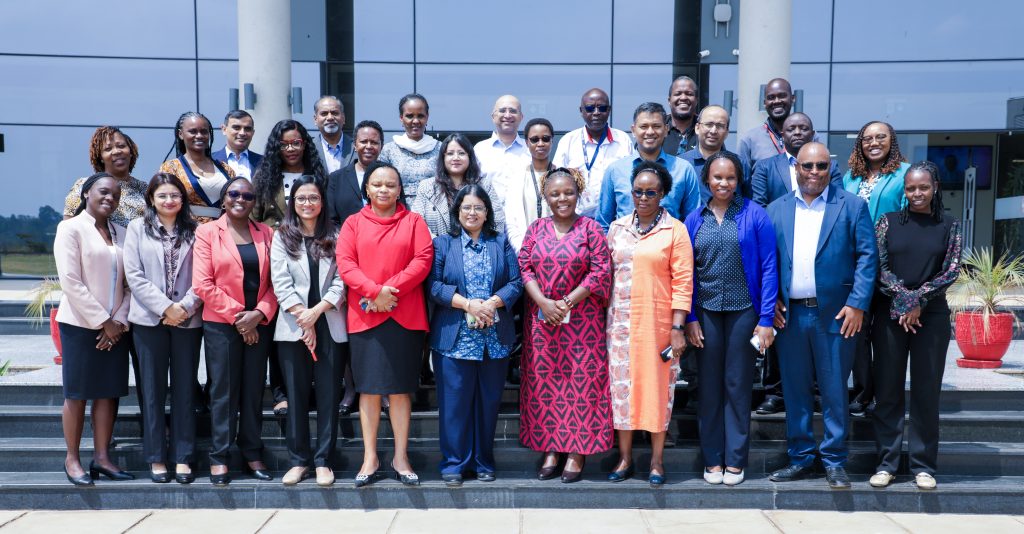
Amref International University (AMIU) hosted the Kenya–India PEP Institutional Knowledge Exchange Visit, bringing together leading health professions education institutions from Kenya and India to strengthen collaboration, share innovative practices and explore opportunities for institutional partnerships. Held under the theme “Strengthening Health Professions Education through Institutional Collaboration, Innovation and Knowledge Exchange,” the exchange formed part of ongoing efforts within the Partnership for Education of Health Professionals (PEP) programme to promote South–South learning and strengthen health professions education through collaboration, innovation and mutual learning. The visit convened representatives from Amref International University (AMIU), Kenyatta University (KU), Christian Medical College (CMC) Vellore, the All India Institute of Medical Sciences (AIIMS) New Delhi, the Public Health Foundation of India (PHFI), and the PEP Secretariat at Amref Health Africa. The programme included engagements at both AMIU and Kenyatta University, providing participants with opportunities to gain insights into institutional approaches to health professions education, research and innovation. The knowledge exchange provided a platform for Kenyan and Indian partners to showcase progress under the PEP programme while exchanging experiences on strengthening academic programmes, faculty capacity, research and student learning. Through interactive discussions and institutional presentations, participants explored practical approaches to preparing the next generation of health professionals to respond to evolving health needs. Among the key areas of discussion were innovative teaching and learning approaches, curriculum development, digital learning, faculty development, collaborative research and postgraduate education. Participants also reflected on strategies for strengthening institutional partnerships that foster knowledge sharing, promote academic excellence and contribute to resilient health systems. Speaking during the engagement, participants underscored the importance of international collaboration in addressing common challenges facing health professions education. They noted that partnerships built on shared expertise and mutual learning are essential in developing competent, responsive and future-ready health professionals. The exchange also explored opportunities for sustained collaboration between Kenyan and Indian institutions, including joint teaching initiatives, collaborative research projects, faculty exchange programmes, postgraduate training and the development of shared learning resources. These areas of collaboration are expected to strengthen institutional capacity while expanding opportunities for students, faculty and researchers across participating institutions. As a university committed to transforming health education in Africa, AMIU continues to champion partnerships that promote innovation, evidence generation and excellence in teaching and learning. Hosting the Kenya–India PEP Institutional Knowledge Exchange reflects the University’s commitment to building strategic collaborations that contribute to stronger health systems and a well-prepared health workforce. The programme concluded with a guided tour of the Amref International University campus, offering delegates an opportunity to experience firsthand the University’s teaching and learning environment. The visit included key facilities such as the Clinical Skills Laboratory, where participants gained insight into AMIU’s simulation-based approach to training competent and practice-ready health professionals. Delegates also explored other learning spaces that support innovation, research and student-centred education, providing a practical perspective on the University’s commitment to excellence in health professions education. The Kenya–India PEP Institutional Knowledge Exchange reaffirmed the value of South–South collaboration in advancing health professions education. By bringing together institutions with diverse expertise and shared aspirations, the engagement strengthened partnerships, fostered mutual learning and laid the groundwork for future collaboration in teaching, research and capacity development to improve health outcomes across Africa and beyond. #HealthProfessionsEducation #SouthSouthCooperation #GlobalHealth #MedicalEducation #AmrefInternationalUniversity #PEP #Innovation #HealthWorkforce
Breaking Language Barriers: How AMIU Is Preparing the Next Generation of Global Health Leaders Through an Innovative Postgraduate Training Model

Across a continent shaped by diverse languages and cultures, the ability to communicate across linguistic boundaries is essential for effective collaboration, leadership, and access to professional opportunities. Recognising this, Amref International University (AMIU) is integrating foreign language training into postgraduate health education to equip scholars with the skills required to navigate diverse linguistic and professional environments and strengthen Primary Health Care (PHC) systems across Africa. This approach is being implemented through the Africa Health Collaborative (AHC) scholarship programme, which aims to nurture a new generation of transformative health leaders by supporting talented, service-oriented young Africans to pursue postgraduate education and realise their leadership potential. The Africa Health Collaborative is a multi-year partnership working to strengthen Primary Health Care systems across Africa through health workforce development, education, innovation, and entrepreneurship. It brings together the Mastercard Foundation, Amref International University, Amref Health Africa, Addis Ababa University, African Leadership University, African Institute for Mathematical Sciences, Ashesi University, Kwame Nkrumah University of Science & Technology, Moi University, the University of Cape Town, and the University of Toronto. The Collaborative focuses on preparing and positioning young people to drive meaningful impact in three critical areas: Health Employment, Health Entrepreneurship, and Health Ecosystems. As an accredited institution of higher learning focused on health sciences, AMIU contributes to this vision through a scholarship programme that combines academic excellence with practical leadership development. Beyond academic advancement, the programme equips scholars with the skills, knowledge, and exposure needed to strengthen PHC systems in their countries and contribute to improved global health outcomes. One way the AHC programme advances this objective is through micro-credential courses designed to enhance employability and broaden professional competencies. Foreign language training is one such offering, enabling graduates to pursue professional opportunities in diverse linguistic and cultural settings. Innovative Postgraduate Training Model AMIU is implementing an innovative postgraduate training model that integrates foreign language training for master’s scholars under the AHC programme. Under this model, 21 Anglophone scholars from Kenya and Zambia are studying French alongside their two-year master’s programme to attain A1 certification. In addition, three Francophone scholars from Senegal completed an intensive three-month Advanced English Language Course at the AMIU Language Academy to achieve C2-level proficiency before commencing the master’s programme, where English is the language of instruction. At AMIU, language learning is positioned as a transformative pathway that equips future health professionals with the confidence and skills to work effectively in multilingual and multicultural environments. Through its Language Academy, AMIU applies a storytelling-based pedagogy that connects learning to identity, purpose, and leadership. This model is particularly relevant in contexts where language barriers can limit access to education, employment, and cross-border professional opportunities. Tailored Language Training To support a smooth transition into postgraduate study for the Francophone scholars, the English curriculum was tailored to their academic needs. In addition to core competencies in speaking, listening, reading, and writing, the programme incorporated terminology and concepts from Primary Health Care and public health practice. This targeted approach equipped the scholars with the language skills required to engage confidently with academic content, research, and professional discourse. The English learning experience also extended beyond the classroom. Living and studying in Kenya immersed the scholars in a new cultural environment, enabling them to deepen their understanding of the social and cultural factors that influence health-seeking behaviours and health outcomes. Experiential Learning The scholars participated in several experiential learning opportunities that broadened their perspectives on health systems and leadership. At the AMIU 2nd Primary Health Care Congress, they engaged with experts and practitioners working to strengthen PHC systems across Africa. Through the Idea to Impact Programme, a flagship initiative of the AMIU Health Entrepreneurship Academy, they gained insight into the venture creation journey, from ideation and execution to investment readiness. They also participated in the AHC-supported Gown to Town Programme, which uses simulation-based learning to prepare young professionals for the transition from training into the health workforce. Reflections on the English Training Completion of the Advanced English Language Training Programme provided an opportunity for the scholars to reflect on their learning journey. In their reflections, they expressed appreciation for the opportunity and described the experience as transformative. Reflecting on his experience, Dr Aly Mbaye said: “I discovered a beautiful culture, amazing people, and a warm environment that made Kenya feel like home.” He added: “This experience represents the future of health collaboration in Africa where East and West Africa work together to build stronger and sustainable health systems.” Mr Massamba Mbaye reflected on the programme’s lasting impact, noting: “This journey has helped us grow academically, professionally and personally. Our ambition is not only to earn a Master’s degree, but to gain the expertise needed to serve our communities effectively.” For Ms Adja Sidibe Korka: “From the moment we arrived, the kindness, hospitality, openness and support we received transformed a new country into a second home.” She added that exposure to a new culture and learning environment enabled her to build professional networks and draw inspiration from women leaders in PHC at the University. Faculty Perspectives Congratulating the scholars on their achievement, Prof. Alice Lakati, Deputy Vice-Chancellor for Research and Community Extension, commended them for undertaking studies in an English-speaking setting, noting that: “Multilingual skills are a strength that will enhance your competitive edge in the global job market.” Prof. Duncan Irungu, Principal of the AMIU Institute of Sustainable Innovations (ISI), where the AMIU Language Academy is domiciled, encouraged the scholars not to “normalise what is not ordinary” and challenged them to become “transformative global PHC leaders.” Welcoming the scholars to the AMIU School of Public Health, Dean Prof. Josephat Nyagero congratulated them on successfully completing the English training component of the programme. He expressed confidence that the scholars will acquire the knowledge, skills, and competencies required to become impactful public health professionals. Looking Ahead These reflections demonstrate how language training, academic preparation, cultural immersion, and experiential learning can be integrated into a postgraduate health programme. By investing in these areas, the Africa Health Collaborative and AMIU are preparing students for postgraduate success while developing a new generation of health leaders equipped to contribute to resilient and responsive Primary Health Care systems across Africa and globally. Written by Dr Mildred Wamalwa smm panel
AMIU and Kwale County Explore Strategic Partnership to Strengthen the County Health Workforce

Amref International University (AMIU) is taking another step towards advancing health systems in Africa through a proposed strategic partnership with the County Government of Kwale. The University’s Vice Chancellor, Prof. Joachim Osur, today held discussions with the Governor of Kwale County, H.E. Fatuma Achani, on a Memorandum of Understanding (MoU) that will support the county’s efforts to strengthen its health workforce and improve health outcomes for communities. The proposed collaboration will focus on developing a highly skilled and responsive health workforce through targeted education, professional development and institutional support aligned to the county’s health priorities. Among the areas discussed were capacity building for healthcare professionals, strengthening specialised competencies, enhancing health service delivery, and equipping health workers with the skills required to respond to evolving healthcare needs. The discussions also highlighted the importance of data-driven planning and evidence-based decision-making to guide health investments and improve service delivery across the county. As part of the proposed partnership, AMIU will also provide technical expertise, mentorship and practical learning opportunities by working closely with county health teams to strengthen health systems and support sustainable workforce development. Speaking after the meeting, both parties reaffirmed their shared commitment to building resilient health systems through collaboration between academia and county government. Once formalised, the Memorandum of Understanding will provide a framework for joint initiatives in health workforce development, technical capacity building, research, mentorship and other areas of mutual interest that contribute to improved healthcare services for the people of Kwale. The engagement reflects AMIU’s commitment to raising leaders for Africa’s health transformation and partnering with governments to build stronger, more resilient health systems across the continent. smm panel
AMIU Graduates over 600 Health Professionals, Strengthening Africa’s Health Workforce
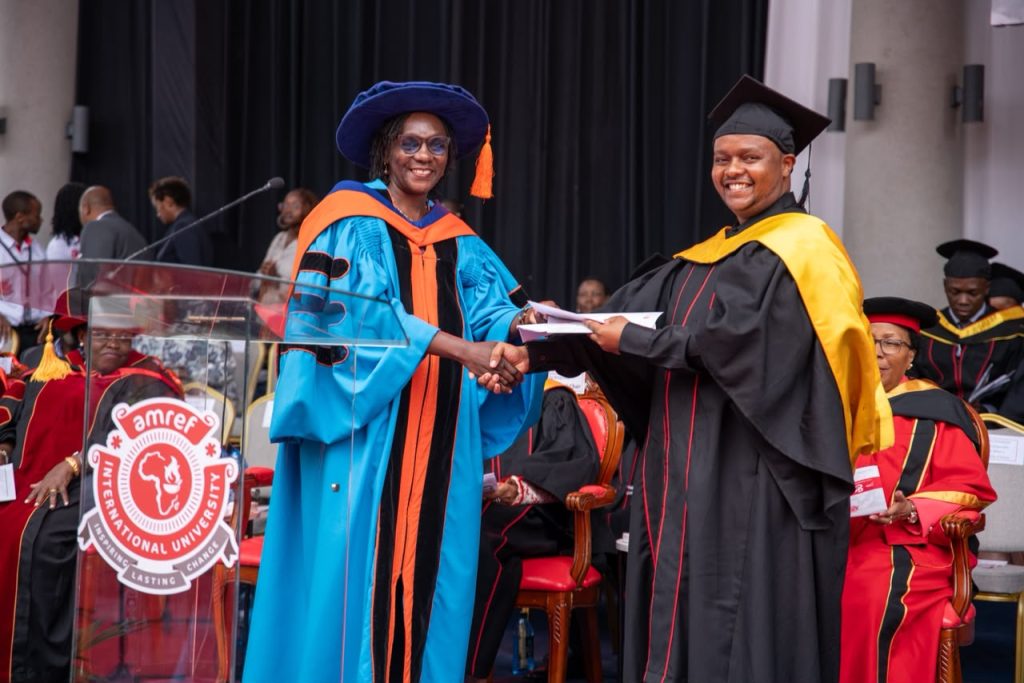
Amref International University (AMIU) has celebrated its 7th Graduation Ceremony, awarding qualifications to over 600 graduates across certificate, diploma, higher diploma, bachelor’s and master’s programmes. Held under the theme “Raising Leaders for Africa’s Health Transformation,” the ceremony celebrated a new generation of health professionals ready to strengthen health systems, advance innovation and improve health outcomes across Africa. With the graduation of the Class of 2026, the University has now produced nearly 1,500 graduates since 2021, reflecting its growing contribution to developing Africa’s health workforce and preparing health leaders equipped to respond to the continent’s evolving healthcare needs. This year’s graduation also comes at a significant moment as the Amref family gears towards celebrating 70 years of transforming health across Africa. For seven decades, Amref Health Africa has championed community-led health solutions, advanced health equity and strengthened the continent’s health workforce. As a Chartered University within the Amref Health Africa family, AMIU is proud to carry that legacy forward by preparing the next generation of health professionals and leaders who will shape Africa’s health transformation. The ceremony was presided over by AMIU Chancellor, Mrs Tsitsi Masiyiwa, while Dr Joyce Kaducu, Former Minister of Education and Sports of the Republic of Uganda, served as the Chief Guest. In her address, Chancellor Mrs Tsitsi Masiyiwa reminded graduates that leadership is measured by the impact they have on others. “Let your ambition always be greater than personal success. Measure your life not only by what you achieve, but by what you enable others to achieve. Measure your influence not only by the positions you hold, but by the opportunities you create for those who follow.” Delivering the keynote address, Dr Joyce Kaducu underscored the importance of investing in the health workforce as a foundation for national and continental development. “Investing in the health workforce is investing in the future of a nation. Every well-trained health professional strengthens communities, drives innovation, and improves health outcomes for generations to come.” Vice Chancellor Professor Joachim Osur reaffirmed AMIU’s commitment to developing graduates who combine academic excellence with leadership, innovation and service to communities across Africa, noting that the University continues to prepare professionals who are ready to lead the transformation of healthcare across the continent. The Class of 2026 included 16 master’s graduates, while the largest graduating cohorts were from the Bachelor of Science in Nursing, Diploma in Community Health and Diploma in Kenya Registered Community Health Nursing programmes, reflecting the University’s continued investment in strengthening primary healthcare across Africa. The graduation ceremony also celebrated the partnerships that continue to strengthen AMIU’s mission of raising leaders for Africa’s health transformation. KCB Group was represented by Rosalind Gichuru, Group Director, Marketing and Communications, while representatives from HIKVision also graced the occasion, reaffirming the importance of collaboration between academia, industry and development partners in preparing the next generation of health leaders. The wider Amref Health Africa family was also well represented. Dr Patrick Kagurusi, Country Director of Amref Health Africa in Uganda, joined the celebration virtually and encouraged graduates to embrace collaboration throughout their careers. “I encourage you to embrace collaboration throughout your careers. Learn from one another. Share your knowledge generously. Build partnerships that strengthen institutions and improve the lives of the communities you serve. Our greatest progress will come when we work together rather than apart.” Representing Amref Health Africa USA, Chief Executive Officer Robert Kelty reminded graduates that the future of health in Africa will be shaped by leaders who serve with humility, integrity and purpose. “The future of health in Africa will not be shaped in conference rooms but by people who listen before they lead, who understand that trust must be earned, and who know that health, above all, is a matter of dignity. It will be shaped by you.” The University’s global alumni community was represented by Dr Ravi Ram, Chief Executive Officer of the Global Amref Alumni and Associates Network, who welcomed the graduates into a worldwide network of professionals committed to advancing health through collaboration, mentorship and lifelong learning. He encouraged the Class of 2026 to remain connected to one another and to use every professional relationship as an opportunity to strengthen communities and improve health outcomes. Also joining the celebration was Dr Richard Lesiyampe, Chief Executive Officer of Kenyatta National Hospital, who challenged graduates to uphold the highest standards of professionalism and ethical practice. He encouraged them to embrace lifelong learning, innovation and patient-centred care, reminding them that Africa’s health transformation depends on competent, compassionate and practice-ready professionals committed to strengthening health systems across the continent. As graduates joined the growing AMIU alumni community, they were encouraged to embrace lifelong learning, collaborate across borders and use their knowledge and skills to improve lives wherever they serve. The ceremony also recognised the unwavering support of parents, guardians, faculty, staff and partners whose commitment continues to contribute to the University’s success and the development of Africa’s future health workforce. As a Chartered University and part of the Amref Health Africa family, AMIU remains committed to raising leaders who will shape the future of healthcare through education, research, innovation and service across Africa. smm panel
Amref International University Ranked 4th in Kenya in the Times Higher Education Impact Rankings 2025
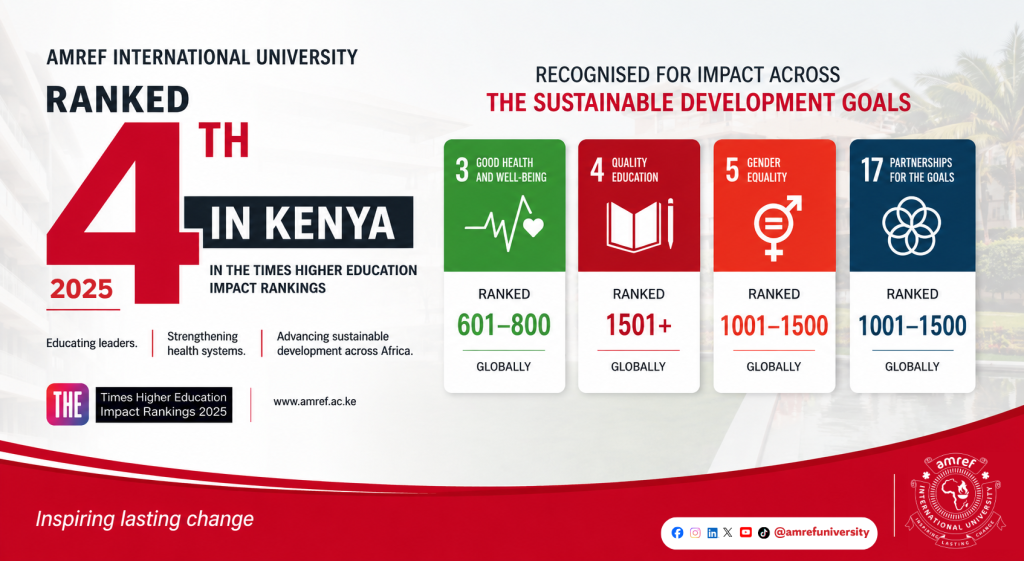
Amref International University (AMIU) has been ranked 4th in Kenya in the Times Higher Education (THE) Impact Rankings 2025, reaffirming its commitment to advancing sustainable development through health sciences education, research, innovation and partnerships. The results of the annual rankings were released on 18 June 2025 during the Times Higher Education Global Sustainable Development Congress. The THE Impact Rankings assess universities worldwide against the United Nations Sustainable Development Goals (SDGs), recognising institutions that demonstrate measurable impact through teaching, research, stewardship and partnerships. The 2025 rankings evaluated 2,526 institutions from 130 countries and territories. Western Sydney University retained the top position In Kenya, Amref International University ranked fourth, alongside other top-performing institutions including the University of Nairobi, Kenyatta University, Murang’a University of Technology and Jomo Kenyatta University of Agriculture and Technology. AMIU’s placement among Kenya’s leading universities reflects its growing contribution to addressing health and development challenges across Africa through transformative education, impactful research and strategic partnerships. Commenting on the recognition, AMIU Vice Chancellor, Professor Joachim Osur, said: This recognition is a testament to the collective efforts of our students, faculty, staff, alumni and partners who are committed to advancing health and sustainable development across Africa. As Africa’s Primary Health Care University, we believe that higher education must do more than impart knowledge; it must contribute solutions to society’s most pressing challenges. Our ranking in the Times Higher Education Impact Rankings affirms our commitment to developing transformative leaders, generating impactful research and strengthening health systems that improve lives and communities across the continent.” As Africa’s Primary Health Care University, AMIU continues to advance its mission through innovative teaching, impactful research, community engagement and strategic collaborations that contribute to healthier communities across the continent. The University was recognised across four Sustainable Development Goals: These results reflect AMIU’s contribution to advancing health, education, gender equity and partnerships for sustainable development through its academic programmes, research initiatives and engagement with communities and partners across Africa. The achievement further reinforces the University’s commitment to excellence and its contribution to the Sustainable Development Goals through health sciences education, research, innovation and partnerships. As AMIU continues to expand its regional and global footprint, it remains focused on raising leaders for Africa’s health transformation and delivering solutions that improve lives and strengthen health systems across the continent. To view the full Times Higher Education Impact Rankings 2025, visit: https://www.timeshighereducation.com/impactrankings smm panel
International Staff Week at University of Alcala, Spain

What does international collaboration look like in practice? For Amref International University (AMIU), it looks like meaningful conversations across continents, shared learning between institutions, and creating opportunities that expand both institutional and individual growth. From 18–22 May 2026, AMIU participated in the Erasmus+ KA171 Mobility Days hosted by the University of Alcalá in Alcalá de Henares, Madrid. The programme convened higher education institutions from Europe, Africa, and the Americas to explore partnerships, mobility opportunities, and the future of international higher education. Representing AMIU were Dr. Edna Tallam-Kimaiyo (HOD, Community Health), Jackie Mbuthia, Training Coordinator, School of Public Health, and Fauziya Kassim (Office of the DVC, Academic Affairs). The mobility opportunity attracted strong interest across the University, with applications from both academic and non-academic staff, reflecting the growing value staff place on international exposure and collaborative learning opportunities. Throughout the engagement, the AMIU delegation contributed perspectives on the internationalisation of academic programmes while also exploring practical avenues for collaboration under the Erasmus+ KA171 framework. Beyond the sessions and discussions, the experience reinforced an important reality: African institutions are increasingly helping shape global academic conversations; not simply participating in them. AMIU’s continued recognition as a key international partner reflects the strength of our collaborations and the momentum of our internationalisation agenda. These engagements create pathways for academic exchange, professional development, institutional learning, and long-term partnerships that benefit both staff and students. Beyond the programme sessions, staff also had the opportunity to explore Madrid and Barcelona, experience new cultures, and connect with peers from different parts of the world, making the exchange both professionally enriching and personally memorable. For staff considering future mobility opportunities, programmes like these offer more than travel; they provide exposure, networks, new perspectives, and the chance to contribute to conversations shaping higher education globally. We extend our appreciation to the University of Alcalá for their warm hospitality and for hosting a thoughtful and impactful programme. #AMIU #ErasmusKA171 #Internationalisation #HigherEducation #GlobalPartnerships #StaffMobility #AcademicExchange #UniversidadDeAlcalá smm panel
Amref International University Joins the Reach Alliance as its Tenth Global University Partner

Professor Alice Lakati (Deputy Vice Chancellor, Research and Community Extension) and Marin MacLeod (Executive Director, Reach Alliance) at Amref International University in Nairobi, Kenya. Amref International University (AMIU) has joined the Reach Alliance, becoming its tenth university partner globally and third partner institution in Africa. The partnership marks a significant step in expanding research and leadership opportunities across the continent. Through student-led and community-engaged collaboration, the institutions will work to advance solutions to climate, economic, and public health challenges. “Sub-Saharan Africa (SSA) bears a disproportionate share of the global disease burden but has historically lagged in research output and scientific capacity,” said Professor Alice Lakati, Deputy Vice Chancellor, Research and Community Extension at AMIU. “This partnership between AMIU and the Reach Alliance reflects a shared commitment to empowering the next generation of leaders, researchers, and healthcare professionals across Africa.” Both institutions share a commitment to building global reputations grounded in meaningful societal impact. They prioritize enabling students to lead research that moves beyond theory into practical implementation and measurable action, while equipping emerging leaders to address the world’s most pressing challenges. “This partnership is rooted in shared values of co-creation and reciprocal learning. We’re excited to welcome AMIU into the Reach Alliance network and look forward to learning from their expertise, leadership, and strong community-based approach,” said Marin MacLeod, Executive Director of the Reach Alliance. Through this partnership, AMIU students and faculty will join a network of more than 400 students and researchers across nine universities in eight countries, including Ashesi University, Howard University, Singapore Management University, Tecnológico de Monterrey, University of Melbourne, University of Oxford, University of Toronto, University College London, and University of Cape Town. Together, these partners conduct interdisciplinary research focused on improving access to essential services and opportunities for underserved populations worldwide. “AMIU contributes to the fulfilment of Amref’s vision of sustainable improvements in health in Africa, based on local expertise and local solutions to local challenges,” said Navin Singh, Executive Director of Amref Health Africa in Canada. Founded in 2017 under Amref Health Africa, AMIU builds on nearly 70 years of commitment to improving the health and well-being of communities across Africa. Guided by Amref’s legacy of strengthening health systems and investing in women and young people as agents of change, the university is dedicated to developing transformative leaders in healthcare and related fields. AMIU continues to advance innovative, competency-based training and research that respond to the evolving needs of African health systems and the broader global health landscape. Founded in 2015 by the University of Toronto, the Reach Alliance is a global network of universities advancing inclusive development through collaborative research and innovation. To date, it has produced more than 100 research reports across 40 countries, with actionable insights that have been published in leading journals and taken up by policymakers and sector leaders around the world. The partnership between AMIU and the Reach Alliance will create new opportunities for students to engage in hands-on global research, collaborate across disciplines and geographies, and contribute to innovative, evidence-based solutions informed by diverse perspectives and lived experience. About the Reach Alliance The Reach Alliance is a consortium of global universities : with partners in Australia, Canada, Ghana, Kenya Mexico, Singapore, South Africa, United Kingdom, and the United States , developing the leaders we need to solve urgent local challenges of the hard to reach those underserved for geographic, administrative, or social reasons. Working in interdisciplinary teams, Reach’s globally minded students use rigorous research methods to identify innovative solutions to climate, public health, and economic challenges. Research is conducted in collaboration with local communities and with guidance from university faculty members, building capacity and skills among Reach’s student researchers. The power of the Reach Alliance stems from engaging leading universities to unleash actionable research insights for impact. These insights have been published in leading journals and taken up by policymakers and sector leaders around the world. The Reach Alliance was created in 2015 by the University of Toronto’s Munk School of Global Affairs & Public Policy, in partnership with the Mastercard Center for Inclusive Growth. It is guided by an advisory council of leaders in academia, and in the private, public, and nonprofit sectors who help to drive impact, influence and scale, and support fundraising efforts. Learn more at reachalliance.org. About Amref International University Amref International University (AMIU) is a chartered, premier Pan-African institution of higher learning, established in 2017 and dedicated to advancing excellence in health sciences education. Rooted in over six decades of experience and expertise from Amref Health Africa, AMIU provides a globally informed and community-centred approach to training the next generation of health professionals. The University is committed to developing a transformative health workforce for Primary Health Care (PHC) and to advancing the translation of evidence into practice for effective and sustainable PHC systems. Through its academic mandate, AMIU contributes to strengthening health systems across Africa by producing competent and responsive health professionals. AMIU offers academic and professional programmes, including postgraduate and undergraduate degrees, higher diplomas, diplomas, certificates, and Continuing Professional Development (CPD) courses. These programmes are designed to equip learners with practical skills, research capacity, and globally relevant competencies that address contemporary and emerging health challenges. Learn more at https://amref.ac.ke/. smm panel
Honouring the Legacy of His Excellency Festus Gontebanye Mogae, Inaugural Chancellor of Amref International University
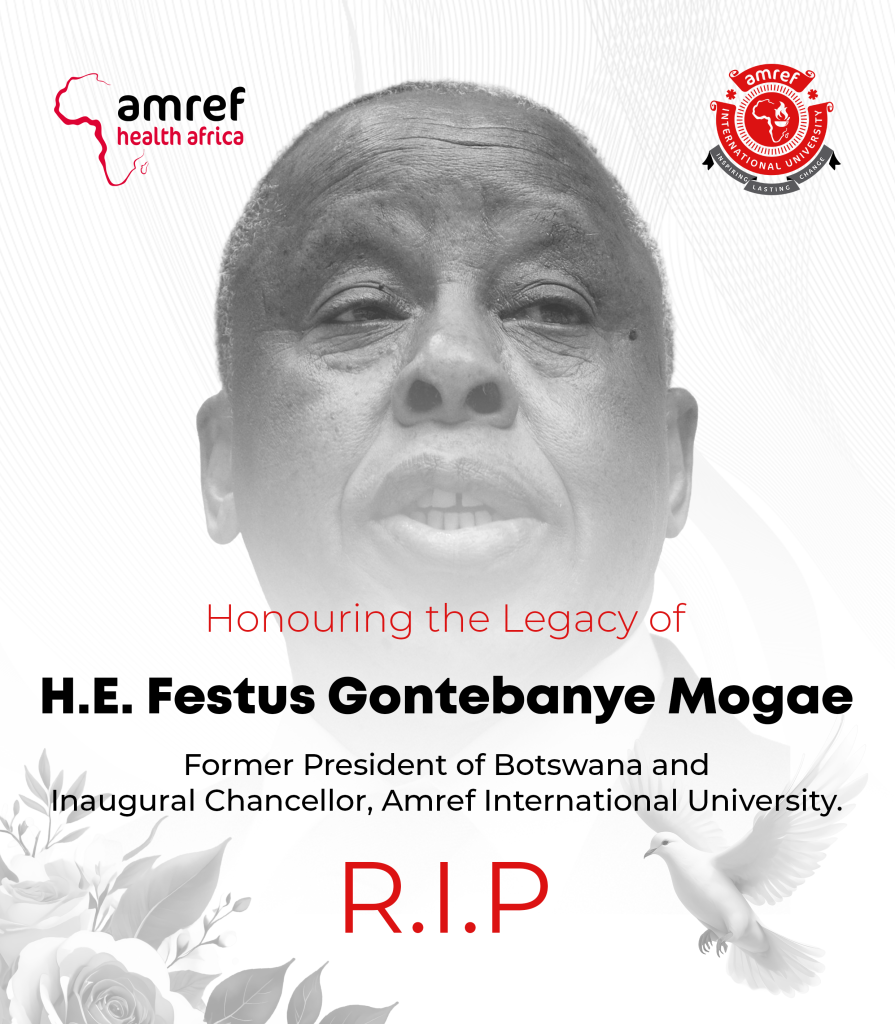
On behalf of the Amref Health Africa Group, we extend our deepest condolences to the people and Government of Botswana, and to the family of His Excellency Festus Gontebanye Mogae, former President of the Republic of Botswana and founding Chancellor of Amref International University. President Mogae was a distinguished African statesman whose leadership, humility, and unwavering commitment to public service left a lasting mark across the continent. A respected economist and global champion in the fight against HIV/AIDS, he dedicated his life to advancing health, development, and dignity for African communities. We were deeply honoured to have him serve as the inaugural Chancellor of Amref International University from 2019 to 2025. Through his wisdom, vision, and unwavering belief in African-led solutions, he helped shape the University’s mission to strengthen health systems and nurture the next generation of African health leaders. President Mogae believed in the power of evidence-based learning, community-centred health systems, and collective action to build a healthier and more equitable Africa. His legacy will continue to inspire our work and the many lives he touched across the continent and beyond. At this moment of mourning, we stand in solidarity with the people of Botswana and all who were inspired by his extraordinary leadership and service. May his soul rest in eternal peace. Dr Githinji Gitahi, Group CEO Amref Health Africa smm panel
The Future of Work in Primary Health Care (PHC): Emerging Roles and Skillsets

The Future of Work in Primary Health Care (PHC): Emerging Roles and Skillsets Primary Health Care (PHC) remains the foundational pillar for strengthening health systems, including progress towards the achievement of Universal Health Coverage (UHC). For this to be realised, PHC must be redesigned to strengthen the health workforce to be resilient, responsive, inclusive, and digitally enabled. It is on this premise that Amref International University and its partners convened the 2nd Primary Health Care Congress under the theme: Redesigning Primary Health Care: Building Resilience Amid Global Uncertainty. Among the most compelling discussions was a plenary session hosted by the Africa Health Collaborative (AHC). The programme convened partners, policymakers, and practitioners for a timely discussion on “The Future of Work in Primary Health Care: Emerging Roles and Skillsets.” At the centre of the conversation was a stark reality. Africa is projected to face a shortage of 6.1 million health workers by 2030. This is not a distant concern, as it is already visible in overstretched health systems, long patient queues, and health workers managing overwhelming workloads, as elaborated by Timothy Kinoti, Learning Facilitator, Africa Health Collaborative (University of Toronto). Yet the conversation did not dwell on deficits alone; it also highlighted solutions. What unfolded was not just another panel. It was a grounded and comprehensive reflection on what it will take to build a health workforce that can truly meet Africa’s health service delivery needs. The conversation shifted from workforce shortages to the skills health workers need today and in the future. Discussions highlighted a critical gap between training and workforce needs, calling for curricula alignment with evolving health systems. Speakers emphasised a new skills mix combining clinical expertise, digital literacy, soft skills, and human-centred approaches to service delivery. Entrepreneurship emerged as a pathway for young professionals to shape their own opportunities, create employment, and provide solutions to PHC challenges. Employee retention strategies remain essential to curb labour migration. A workforce challenge shaped by change Primary health care systems across the continent are evolving under increasing pressure. The continent bears approximately 25% of the global disease burden while facing a projected shortage of 6.1 million health workers by 2030. The population in Africa is experiencing a youth bulge and is expected to become even younger. Non-communicable diseases are rising alongside infectious diseases. These demographic and epidemiological shifts, changing political and fiscal landscapes, digital tools, and artificial intelligence continue to reshape how health care is delivered, managed, and measured. These shifts are redefining what it means to be a fit-for-purpose health care worker. Speakers returned to a central question: are current training curricula and delivery models preparing graduates adequately for these changing landscapes? For many, the answer is no. The Vice Chancellor, Amref International University, Prof. Joachim Osur, spoke to a persistent disconnect between training and labour market needs: “Each year, millions of young people graduate across Africa, yet only a fraction secure jobs.” In the health sector, this mismatch is even more concerning because it exists alongside severe workforce shortages. The challenge is not only about the numbers of the health workforce, but whether they possess the right set of skills for the needs of the health system. Rethinking what health workers need to know A central theme emerging from the discussion was the concept of a new “skills stack” for health workers delivering primary health care, as described by Dr. Meshack Ndirangu, Country Director, Amref Health Africa Kenya. Though clinical competence remains essential, it should be complemented by a strong sense of purpose that grounds practitioners in their work. In addition, health workers need to understand the job market, acquire relevant and in-demand skills, and cultivate both technical and soft skills that enhance their employability. With technological advancements, health workers are expected to be competent in utilising data for decision-making, navigating digital tools, and adapting to new technologies, including artificial intelligence. At the same time, a human-centred approach to the delivery of health care has become even more important. Therefore, communication, cultural awareness, and the ability to work across teams are no longer optional but core skills that health workers should acquire. This combination reflects the reality of modern care. Patients are not just cases; they are individuals shaped by social, cultural, and economic contexts. Health systems are not just facilities; they are networks that require coordination, empathy, and trust for quality service provision. From job seekers to job creators A notable perspective in the discussion was the repositioning of young professionals, not just as job seekers but as innovators and job creators. Through the Africa Health Collaborative and partners such as the Mastercard Foundation, young people are gaining access to training, mentorship, seed funding, and platforms that enable them to develop and scale solutions to address PHC challenges, as highlighted by Emanuella Alimlim, Lead for the Africa Health Collaborative, Mastercard Foundation. This investment approach to strengthening the health workforce recognises a fundamental reality: the future of health care will not be built only within existing systems. It will also emerge from ventures and innovative ideas to deliver health care. For many young health professionals, this opens new pathways. Not only finding a job within the PHC system but shaping it by becoming job creators and PHC problem solvers. This in turn is being realised through AHC capacity building interventions that equip the health workforce with a redesigned skill set for the health workforce that goes beyond clinical training to include adaptability, digital literacy, contemporary life and soft skills, entrepreneurship, and systems thinking. Holding on to talent While training more health workers and innovation are critical, retaining them in the health system remains a key priority. Labour migration continues to pull skilled professionals away from the continent, often in pursuit of better pay and working conditions. Retention requires deliberate, strategic, and sustained efforts. Incentives for rural service, clearer career pathways that allow for progression, and improved working environments are all critical factors in promoting retention. Without these measures, investments in training risk benefiting other health systems more than local communities, as emphasised by the Acting County Director of Health Administration and Planning, Nakuru County, Dr. Joy Mugambi and Dr. Diallo Malick, Director of Human Resources, Ministry of Health and Public Hygiene Senegal. A collaborative model The Africa Health Collaborative is a strong example of how partnerships can drive meaningful transformation in addressing health workforce challenges. The Collaborative is built on a multi-partner network that fosters co-creation of solutions, with strong alignment to national health system priorities,