


The Future of Work in Primary Health Care (PHC): Emerging Roles and Skillsets
Primary Health Care (PHC) remains the foundational pillar for strengthening health systems, including progress towards the achievement of Universal Health Coverage (UHC). For this to be realised, PHC must be redesigned to strengthen the health workforce to be resilient, responsive, inclusive, and digitally enabled. It is on this premise that Amref International University and its partners convened the 2nd Primary Health Care Congress under the theme: Redesigning Primary Health Care: Building Resilience Amid Global Uncertainty.
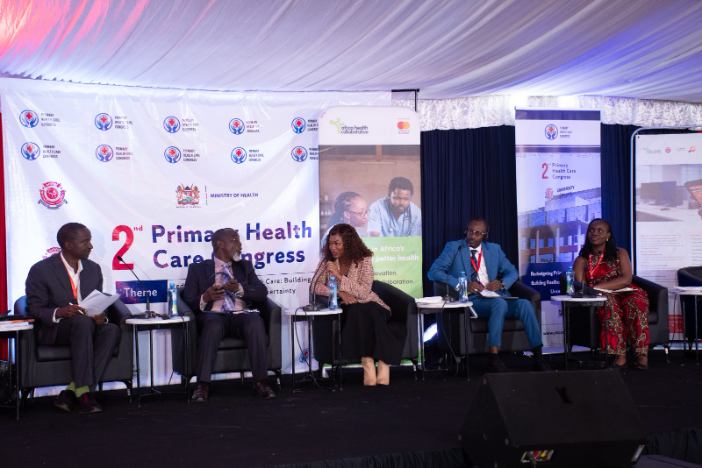
Among the most compelling discussions was a plenary session hosted by the Africa Health Collaborative (AHC). The programme convened partners, policymakers, and practitioners for a timely discussion on “The Future of Work in Primary Health Care: Emerging Roles and Skillsets.” At the centre of the conversation was a stark reality. Africa is projected to face a shortage of 6.1 million health workers by 2030. This is not a distant concern, as it is already visible in overstretched health systems, long patient queues, and health workers managing overwhelming workloads, as elaborated by Timothy Kinoti, Learning Facilitator, Africa Health Collaborative (University of Toronto).
Yet the conversation did not dwell on deficits alone; it also highlighted solutions. What unfolded was not just another panel. It was a grounded and comprehensive reflection on what it will take to build a health workforce that can truly meet Africa’s health service delivery needs. The conversation shifted from workforce shortages to the skills health workers need today and in the future. Discussions highlighted a critical gap between training and workforce needs, calling for curricula alignment with evolving health systems. Speakers emphasised a new skills mix combining clinical expertise, digital literacy, soft skills, and human-centred approaches to service delivery. Entrepreneurship emerged as a pathway for young professionals to shape their own opportunities, create employment, and provide solutions to PHC challenges. Employee retention strategies remain essential to curb labour migration.
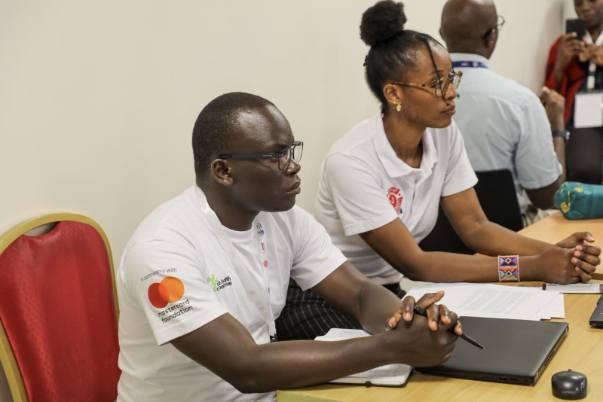
A workforce challenge shaped by change
Primary health care systems across the continent are evolving under increasing pressure. The continent bears approximately 25% of the global disease burden while facing a projected shortage of 6.1 million health workers by 2030. The population in Africa is experiencing a youth bulge and is expected to become even younger. Non-communicable diseases are rising alongside infectious diseases. These demographic and epidemiological shifts, changing political and fiscal landscapes, digital tools, and artificial intelligence continue to reshape how health care is delivered, managed, and measured.
These shifts are redefining what it means to be a fit-for-purpose health care worker. Speakers returned to a central question: are current training curricula and delivery models preparing graduates adequately for these changing landscapes?
For many, the answer is no. The Vice Chancellor, Amref International University, Prof. Joachim Osur, spoke to a persistent disconnect between training and labour market needs: “Each year, millions of young people graduate across Africa, yet only a fraction secure jobs.” In the health sector, this mismatch is even more concerning because it exists alongside severe workforce shortages. The challenge is not only about the numbers of the health workforce, but whether they possess the right set of skills for the needs of the health system.
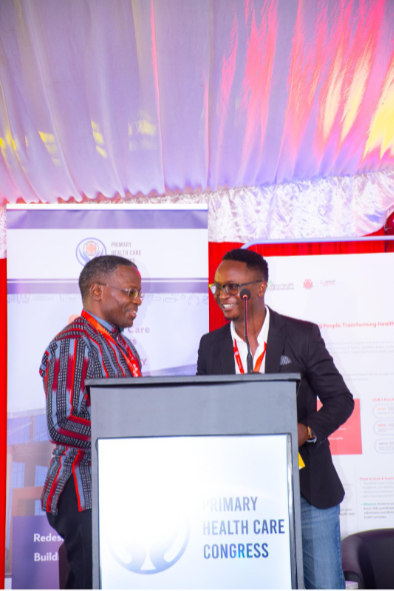
Rethinking what health workers need to know
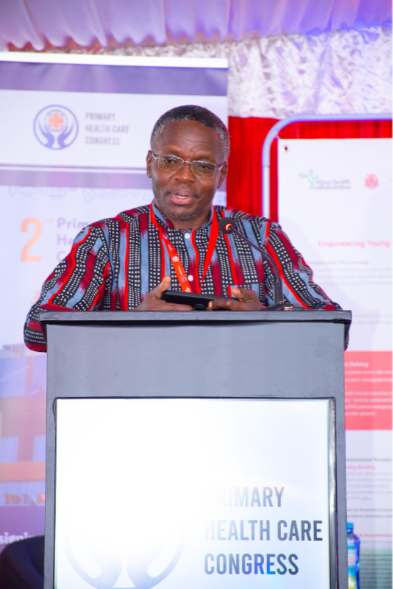
A central theme emerging from the discussion was the concept of a new “skills stack” for health workers delivering primary health care, as described by Dr. Meshack Ndirangu, Country Director, Amref Health Africa Kenya. Though clinical competence remains essential, it should be complemented by a strong sense of purpose that grounds practitioners in their work. In addition, health workers need to understand the job market, acquire relevant and in-demand skills, and cultivate both technical and soft skills that enhance their employability.
With technological advancements, health workers are expected to be competent in utilising data for decision-making, navigating digital tools, and adapting to new technologies, including artificial intelligence. At the same time, a human-centred approach to the delivery of health care has become even more important. Therefore, communication, cultural awareness, and the ability to work across teams are no longer optional but core skills that health workers should acquire. This combination reflects the reality of modern care. Patients are not just cases; they are individuals shaped by social, cultural, and economic contexts. Health systems are not just facilities; they are networks that require coordination, empathy, and trust for quality service provision.

From job seekers to job creators
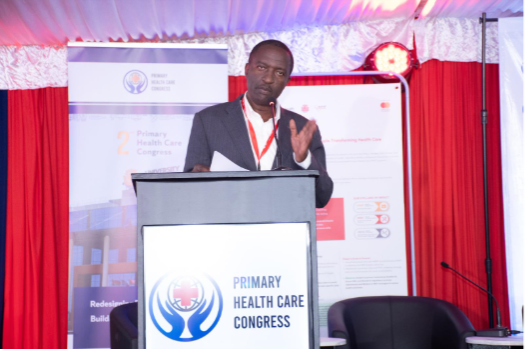
A notable perspective in the discussion was the repositioning of young professionals, not just as job seekers but as innovators and job creators.
Through the Africa Health Collaborative and partners such as the Mastercard Foundation, young people are gaining access to training, mentorship, seed funding, and platforms that enable them to develop and scale solutions to address PHC challenges, as highlighted by Emanuella Alimlim, Lead for the Africa Health Collaborative, Mastercard Foundation. This investment approach to strengthening the health workforce recognises a fundamental reality: the future of health care will not be built only within existing systems. It will also emerge from ventures and innovative ideas to deliver health care.
For many young health professionals, this opens new pathways. Not only finding a job within the PHC system but shaping it by becoming job creators and PHC problem solvers. This in turn is being realised through AHC capacity building interventions that equip the health workforce with a redesigned skill set for the health workforce that goes beyond clinical training to include adaptability, digital literacy, contemporary life and soft skills, entrepreneurship, and systems thinking.

Holding on to talent
While training more health workers and innovation are critical, retaining them in the health system remains a key priority. Labour migration continues to pull skilled professionals away from the continent, often in pursuit of better pay and working conditions. Retention requires deliberate, strategic, and sustained efforts. Incentives for rural service, clearer career pathways that allow for progression, and improved working environments are all critical factors in promoting retention. Without these measures, investments in training risk benefiting other health systems more than local communities, as emphasised by the Acting County Director of Health Administration and Planning, Nakuru County, Dr. Joy Mugambi and Dr. Diallo Malick, Director of Human Resources, Ministry of Health and Public Hygiene Senegal.


A collaborative model
The Africa Health Collaborative is a strong example of how partnerships can drive meaningful transformation in addressing health workforce challenges. The Collaborative is built on a multi-partner network that fosters co-creation of solutions, with strong alignment to national health system priorities, as described by Dr. Marie Therese Yaba Ndiaye, Regional Lead, Health Networks, University of Toronto. Through cross-continental partnerships, the Collaborative is advancing practical and scalable solutions to build a resilient, future-ready primary health care workforce.
The Africa Health Collaborative reaffirmed its commitment to driving transformative change in health workforce development. The Collaborative is engaging academic institutions, governments, industry players, and communities, recognising that no single actor can solve the workforce challenge alone. As Chibanga Mubanga from Zambia, a recipient of the AHC Master’s Scholarship at AMIU, explained, “the training programme goes beyond theory; we are provided with experiential learning opportunities that immerse us in real-world PHC ecosystems.” In addition, scholars have access to micro-credential training designed to broaden their skill set and enhance their employability. For instance, through the Amref International University (AMIU) Language Centre, scholars are also learning French, which positions them for opportunities in Francophone and bilingual African countries, as well as in the global health space.
The Collaborative seeks to leverage higher education institutions to enhance the health care landscape by training over 30,000 skilled primary health care workers; upskilling 60,000 existing health professionals; supporting the development of 5,000 entrepreneurial ventures to create 20,000 new jobs; advancing health care education; and improving access to quality health care services.
Moving from conversation to commitment
As the session concluded, the session moderator, Dr. Micah Matiang’i, AMIU ODEL Director and AHC Health Employment Pillar lead, emphasised the shift from dialogue to action. Key priorities that emerged include aligning curricula with market needs through fostering Quadruple-Helix Partnerships that transition beyond traditional academic silos to ensure curricula are driven by industry demands and community needs; investing in mentorship, innovation platforms, and continuous professional development that support young professionals beyond graduation; and strengthening policies that support health worker retention and career advancement.
By investing in skills, innovation, education, and collaborative ecosystems, Africa will be well positioned to shape resilient, responsive, and inclusive PHC systems that meet the population needs of today, while preparing for the uncertainties of tomorrow. If there was one message that resonated throughout the session, it was this: “Africa does not lack talent. It needs systems that recognise it, develop it, and give it room to thrive.”
The work has already begun.

About the Africa Health Collaborative
The Africa Health Collaborative is a multi-year initiative working to strengthen primary health care systems across Africa through health workforce development, education, innovation, and entrepreneurship. The Health Collaborative brings together the Mastercard Foundation, Amref International University, Amref Health Africa, Addis Ababa University, African Leadership University, African Institute for Mathematical Sciences, Ashesi University, Kwame Nkrumah University of Science & Technology, Moi University, the University of Cape Town, and the University of Toronto.
The Collaborative focuses on preparing and positioning young people to drive meaningful impact in three critical areas:
- Health Employment: Developing a skilled, mission-driven health workforce ready to serve communities.
- Health Entrepreneurship: Fostering innovation and enterprise to solve pressing health challenges.
- Health Ecosystems: Strengthening systems that support access, equity, and resilience in Primary Health Care.
By centering youth leadership, locally grounded solutions, and collaborative action, the Africa Health Collaborative is building a future where African-led health systems are resilient, inclusive, and sustainable.
Co-Written by Dr. Mildred Wamalwa and Angela Gichimu