

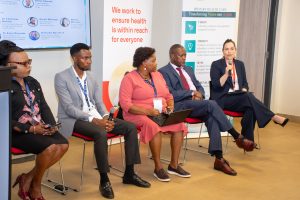
The second day of the 2nd Primary Health Care Congress brought together policymakers, researchers, development partners, and frontline health practitioners to examine how leadership, innovation, and community-led approaches can strengthen Primary Health Care systems across Africa.
Building on the momentum from the opening day, discussions on Day Two focused on practical solutions that countries are implementing to improve the resilience, financing, and delivery of Primary Health Care services.
Across plenary discussions, breakout sessions, and partner-led conversations, speakers emphasized that sustainable health systems must combine strong leadership, effective financing mechanisms, empowered health workers, and community-driven interventions.
Strengthening Leadership, Governance and Financing of Primary Health Care
A central theme throughout the day was the importance of strong leadership and governance in driving Primary Health Care reforms.
Speakers highlighted ongoing reforms in health financing systems designed to improve efficiency, transparency, and access to services. Country experiences shared during the sessions demonstrated how governments are redesigning financing models to ensure that resources reach frontline health facilities where communities receive care.
Discussions also emphasized the importance of legislative frameworks that anchor health system reforms, ensuring predictability of funding, accountability of institutions, and sustainability of health programs.
Participants underscored that effective governance must go beyond policy frameworks to include citizen accountability mechanisms and stronger oversight at community and facility levels.


Digital Transformation Supporting the PHC Workforce
Another major focus of Day Two was the role of digital technologies in strengthening the Primary Health Care workforce.
Across Africa, health systems are increasingly transitioning from fragmented and paper-based data systems toward unified digital platforms that allow real-time reporting, improved patient tracking, and stronger decision making.
Digital tools are also supporting the training and continuous professional development of community health workers and frontline staff through e-learning platforms and mobile applications. These innovations are helping address workforce gaps while enabling health workers to deliver services more efficiently.
Participants noted that for digital health innovations to succeed, they must be designed around the needs of frontline workers and supported by reliable infrastructure, connectivity, and strong governance frameworks.
Community-Based Interventions Driving Impact
Sessions throughout the day reinforced the importance of community-based approaches in delivering effective Primary Health Care.
Evidence presented during research and abstract sessions highlighted how integrated PHC interventions, including water, sanitation, and hygiene programs, can significantly improve health outcomes in communities affected by infectious diseases and neglected tropical diseases.
Community-led models are also helping strengthen referral pathways and improve the uptake of essential health services such as maternal and child health care.In several settings, simple innovations such as community health information points have helped bridge access gaps by bringing information and services closer to communities.
Protecting Breastfeeding as a Core PHC Intervention
Another key discussion focused on protecting breastfeeding environments as a fundamental component of Primary Health Care. Experts highlighted the importance of strengthening policies and health worker capacity to protect breastfeeding from growing commercial influences, particularly aggressive marketing of infant formula products.
The session also marked the launch of the Nourished Truth Operational Toolkit, a practical resource designed to support governments and health systems in strengthening breastfeeding protection policies and implementation. Participants emphasized that breastfeeding remains one of the most cost-effective health interventions, contributing to improved child survival, maternal health outcomes, and reductions in malnutrition.
Technology, Community Systems and Policy Leadership
Across all sessions, a consistent message emerged: resilient Primary Health Care systems require coordinated action across leadership, technology, and community systems.
From financing reforms and digital health tools to community-led innovations and evidence-based policy approaches, participants shared experiences that demonstrate how countries can strengthen PHC delivery even in resource-constrained settings.As the congress continues, these discussions are expected to inform new partnerships, policy reforms, and collaborative initiatives aimed at strengthening Primary Health Care systems and accelerating progress toward Universal Health Coverage across Africa.